
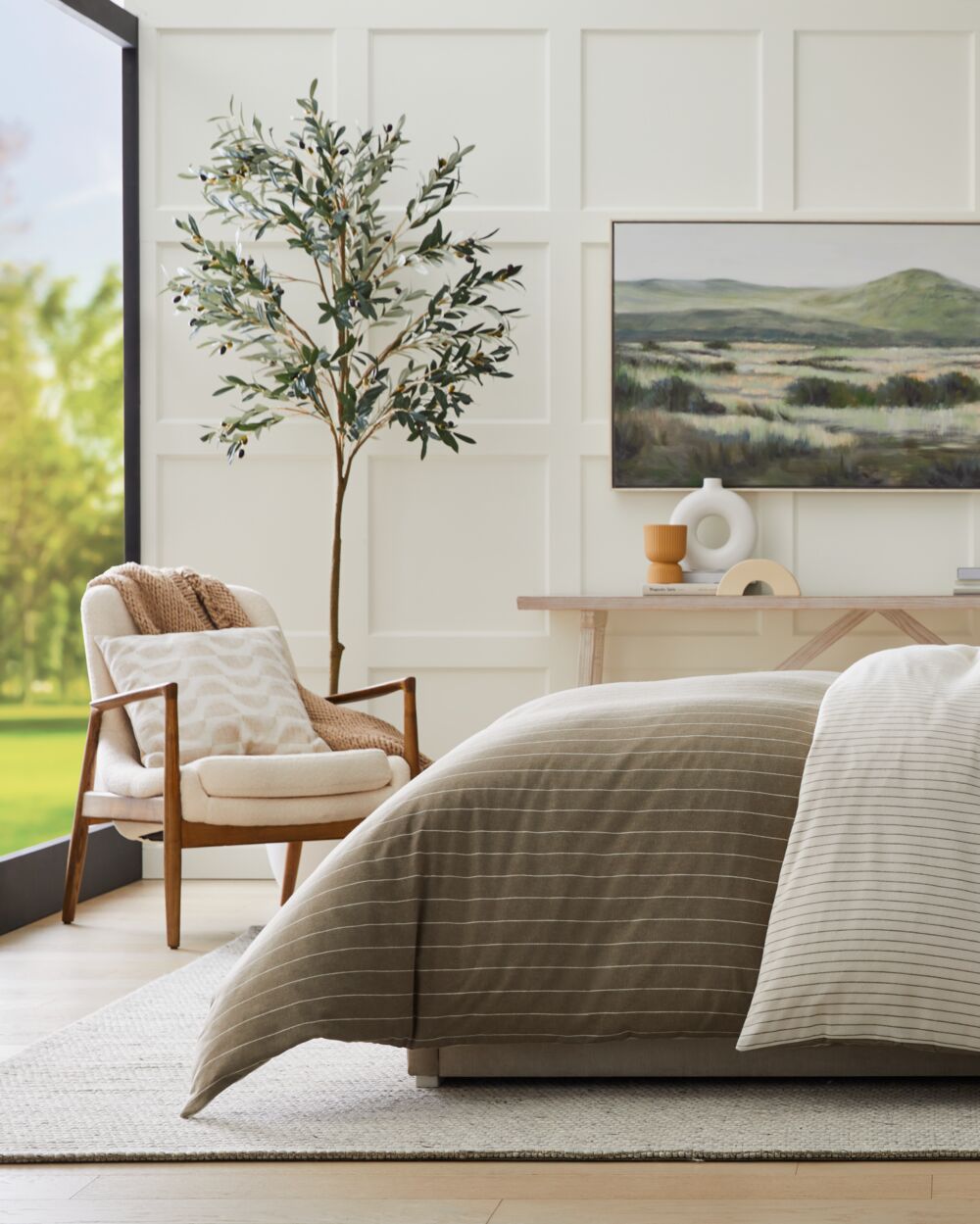
A neutral bedroom can feel calm, timeless, and easy to live with. Without brighter colours competing for attention, the focus shifts to the elements that make a bedroom comfortable: soft bedding, warm lighting, tactile materials, and a thoughtful mix of tones. It also creates a versatile foundation that can be updated over time with new art, accessories, or seasonal layers. The challenge is making sure a neutral room doesn’t feel flat or unfinished. The most effective neutral bedroom ideas go beyond choosing beige or white. They bring together different shades, textures, finishes, and materials to create a room that feels quiet but still has character. Here are five ways to get the balance right.
1. Choose a dominant undertone
Start by deciding whether you want the bedroom to feel predominantly warm or cool. Warm neutrals have yellow, red, or brown undertones and include shades such as cream, oatmeal, sand, and taupe. Cooler neutrals have blue, green, or violet undertones and include soft grey, stone, and some shades of white.
You don’t have to use only warm or only cool tones, but choosing one as the dominant direction will give the room a more cohesive foundation. Before committing to paint, wallpaper, or upholstery, look at samples at different times of day. Natural and artificial light can change how a neutral colour appears, particularly in bedrooms that receive limited sunlight.
Once you’ve established the direction, repeat it through the room’s larger elements, such as the walls, bed, drapery, and rug. The colours don’t need to match. In fact, slight variation is what helps a neutral room feel layered.
2. Create contrast with a range of tones
A room made up entirely of pale neutrals can lose definition. One of the most useful neutral bedroom ideas is to include light, medium, and dark tones so that each part of the room has a clear presence.
If the walls and bedding are light, bring in a medium-toned wood nightstand, a taupe throw, or a deeper upholstered piece. Darker accents can be used more sparingly through lamp bases, picture frames, hardware, or a subtle pattern. Even a small amount of black, charcoal, or deep brown can help ground the palette.
Keep the contrast gentle rather than stark. The goal is to give the eye places to rest while maintaining the room’s calm, tonal quality.
3. Layer different textures and finishes
Texture is especially important when colour is restrained. Combine smooth, soft, matte, woven, and lightly reflective surfaces to create visual interest without disrupting the quiet palette.
The bed is a natural place to start. Layer smooth sheets with a tailored duvet cover and add a folded throw. Beyond the bedding, consider a channelled headboard, woven rug, linen-look drapery, wood furniture, or a softly upholstered chair. Harder finishes, such as ceramic, glass, or metal, provide a useful counterpoint to all that softness.
Variation matters more than quantity. A few clearly different materials will generally add more depth than multiple accessories with similar textures.
4. Add softness around the room
A neutral bedroom should feel as comfortable as it looks. Soft materials around the bed help make the entire room more inviting while also absorbing sound and reducing echo.
An upholstered headboard adds comfort and gives the bed more visual presence. Drapery softens the edges of the windows and helps control light and privacy. A generously sized rug adds warmth underfoot and anchors the furniture, while a bench or accent chair introduces another opportunity for upholstery.
These elements are particularly helpful in bedrooms with hardwood floors, large windows, or minimal architectural detailing. Together, they create a softer envelope around the bed without making the room feel overly decorated.
5. Bring in natural materials and subtle colour
Not every element in a neutral bedroom needs to be beige, cream, or grey. Natural wood, woven fibres, greenery, and landscape-inspired art introduce colour in a way that still feels quiet and connected to the overall palette.
A plant or a few branches can add freshness, while muted greens work almost like neutrals alongside warm whites, taupes, and wood tones. If plants aren’t practical, try a landscape, botanical artwork, or decorative objects in moss, olive, or clay shades.
These touches keep the room from feeling overly controlled. They also make a neutral scheme feel more personal and lived in.
A successful neutral bedroom isn’t defined by one exact colour. It comes from balancing tone, texture, contrast, and comfort. By choosing a consistent undertone, varying the depth of the palette, and layering natural materials with softer finishes, these neutral bedroom ideas can create a space that feels calm, warm, and thoughtfully put together.
Photography by A Plus Creative
