
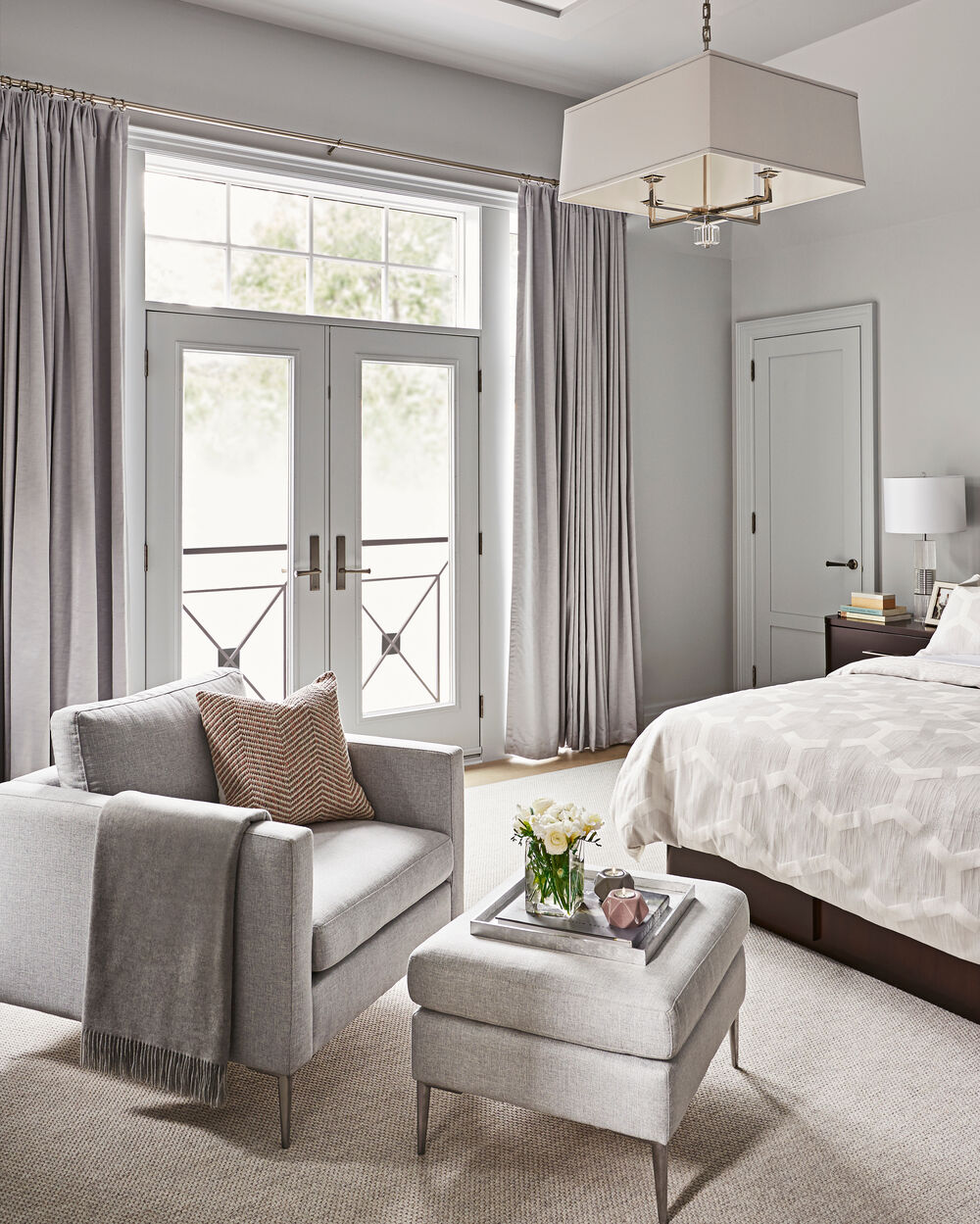
A bedroom doesn’t need a complete redesign to feel more personal and thoughtfully put together. A new wall colour, better-scaled artwork, refreshed bedding, or a more substantial rug can change how the whole room looks. These bedroom decorating ideas focus on achievable updates that add character and polish while working with the furniture and layout you already have.
The best bedroom decorating ideas also have a clear purpose. Rather than adding more objects simply to fill the room, consider what feels unfinished, out of scale, or disconnected. A few targeted changes will usually have more impact than a collection of smaller accessories.
Refresh the walls
Changing the walls can give a bedroom an entirely new direction without replacing the furniture. Paint is the simplest option, whether you introduce a new colour throughout the room or use a slightly deeper shade to define one area. Wallpaper can bring in pattern or texture, while wall panelling or applied moulding adds architectural character.
Consider how the wall treatment relates to the room’s existing elements. A patterned wallpaper works best when its colours connect to the bedding, rug, or upholstery. If the furniture already has a lot of detail, a quieter paint colour or textural wallcovering may provide a better backdrop.
You don’t necessarily need to create a contrasting feature wall. Using one colour or subtle pattern throughout the bedroom can make the space feel larger and more cohesive. The goal is to choose a treatment that gives the furniture and artwork a stronger setting.
Choose art at the right scale
Artwork is one of the easiest ways to make a bedroom feel personal. The subject, colour, and style can reflect your taste while helping connect the room’s wider palette.
Above the bed, one large piece often creates a calmer look than several smaller ones. As a general guide, the artwork should span roughly two-thirds of the bed or headboard width. Hang it close enough to the headboard that the two elements read as a single composition rather than separate features.
A gallery wall can also work, particularly above a dresser or in an open corner. Keep the spacing consistent and look for a common thread, such as matching frames, a shared colour palette, or similar subject matter.
Restyle the bed
Because the bed takes up so much visual space, updating the bedding can refresh the entire room. Start with sheets and a duvet or coverlet that suit how you like to sleep, then add decorative layers with restraint.
A pair of shams can give the bed height, while one or two smaller cushions introduce colour or pattern. Finish with a throw folded across the foot of the bed for another layer of texture. The arrangement should feel inviting rather than overly complicated.
You don’t need to replace every layer seasonally. Switching the throw, cushions, or duvet cover can be enough to shift the room from lighter and fresher in summer to warmer and more textured during the colder months.
Anchor the room with a properly styled rug
An area rug adds softness underfoot, absorbs sound, and helps connect the bed with the surrounding furniture. The most common issue is choosing one that’s too small.
Ideally, the rug should extend beyond both sides of the bed and past the foot, creating a comfortable landing area. It can begin in front of the nightstands rather than running all the way to the wall. In a smaller room, runners placed along either side of the bed can offer softness without requiring one large rug.
Choose a colour and pattern that support the rest of the room. A tonal rug can add texture quietly, while a subtle pattern can introduce movement without becoming the main focal point.
Make the ceiling fixture a design feature
A bedroom ceiling fixture is practical, but it can also become one of the room’s defining decorative elements. Replacing a basic flush mount with a fixture that has a stronger shape, finish, or material can make the entire space feel more considered.
Choose a fixture that suits the ceiling height and furniture scale. A pendant or chandelier can add presence in a larger room with a higher ceiling, while a sculptural semi-flush fixture works well when clearance is limited.
The style doesn’t need to match the bedside lamps exactly. Repeating a finish, colour, or shape is usually enough to make the different fixtures feel connected.
Give the bedside area more presence
Nightstands and lighting help frame the bed, so their scale has a noticeable effect on the room. A very small table beside a tall headboard can feel out of balance. Look for nightstands that relate to the height and visual weight of the bed.
Keep the surface useful and lightly styled. A lamp, a book or two, and one personal or decorative object are often enough. If the nightstand is narrow, a wall sconce or pendant can free up surface space while giving the bed wall a more tailored look.
The two sides don’t need to be identical, but they should feel balanced. Matching lamps can create order even when the nightstands differ, while repeated materials or colours can connect two different arrangements.
Add a functional finishing piece
If space allows, a bench, chair, or ottoman can make a bedroom feel more complete while adding a useful place to sit, get dressed, or set down a throw. It can also create a distinct zone within the room, making the bedroom feel like more than simply a place to sleep.
A bench at the foot of the bed should be slightly narrower than the mattress so it doesn’t overpower the arrangement. In an open corner, a compact chair can create a comfortable reading area, while an ottoman offers a place to put up your feet and may provide hidden storage.
Before adding a piece, make sure there’s still enough room to move comfortably around the bed and between doorways. Choose furniture that supports how you use the room rather than filling empty space for its own sake.
Repeat details to connect the room
Among the most effective bedroom decorating ideas is repeating a few colours, materials, or shapes throughout the space. This makes individual updates feel connected rather than added at different times.
A dark picture frame might relate to a lamp base or furniture leg. The colour in a cushion could appear again in the artwork. Curved forms might be repeated in a mirror, light fixture, and decorative object. These connections don’t have to be exact or immediately noticeable. Their purpose is to create rhythm and cohesion.
Once those relationships are in place, edit the room. Remove anything that competes with the focal point, crowds a surface, or doesn’t add meaning or function. The goal isn’t to make the bedroom minimal. It’s to give the pieces you care about enough space to be appreciated.
With these bedroom decorating ideas, an existing room can feel refreshed without starting over. Focus on scale, make a few purposeful changes, and choose details that add personality as well as function. The result will feel more polished, personal, and complete.
Photography by A Plus Creative
