
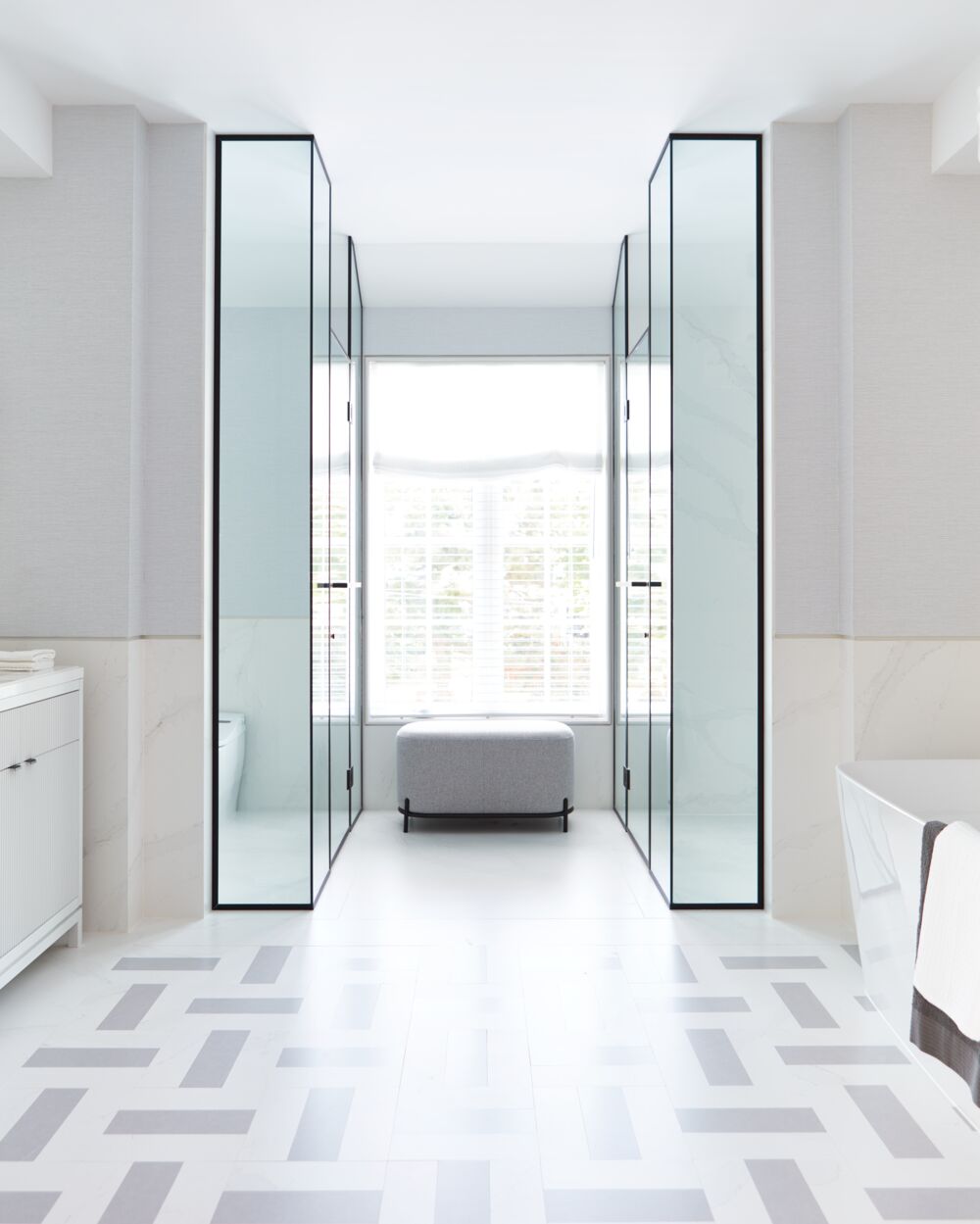
A black and white bathroom has lasting appeal, but its character comes from more than colour alone. The balance of pattern, texture, and personal details can make a simple palette feel rich and inviting. In this principal ensuite designed by Brian Gluckstein, pale surfaces are layered with reeded cabinetry, a graphic floor, and carefully placed art. These five ideas offer inspiration for bringing similar depth to your own space.
1. Use pattern with subtle contrast
A patterned floor brings movement to a room, especially when the walls and cabinetry are understated. An oversized basketweave design gives this ensuite a distinctive foundation, while the soft grey and white combination keeps the effect gentle.
For a black and white bathroom, consider where you want the strongest contrast. If fixtures and frames already provide crisp black outlines, a quieter floor can balance them beautifully. Pay attention to scale, too: larger patterns create a different rhythm than small mosaics, so look at samples together and consider how the layout will read across the room.
2. Give simple cabinetry some texture
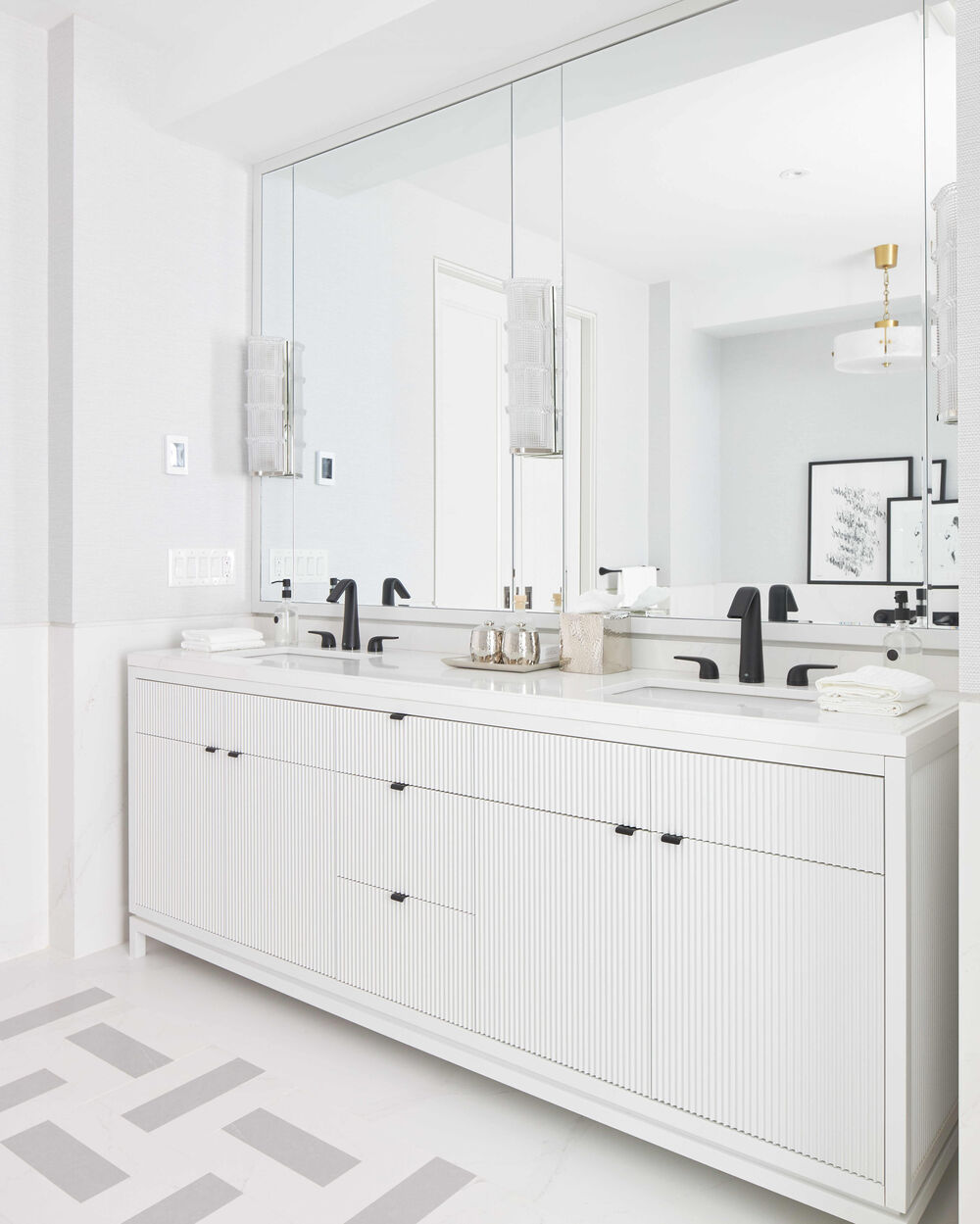
White cabinetry can have plenty of presence when its surface catches the light. Here, fine reeded panels run across the vanity’s doors and drawers, adding a subtle rhythm to the long expanse. Slim hardware allows the texture to remain the focus.
When choosing a vanity, look beyond colour to the details of its construction. Fluting, framed doors, or a distinctive edge can give a familiar finish more character. Consider how those details relate to nearby surfaces: textured cabinetry pairs especially well with a smooth countertop and a simple backsplash.
3. Layer the wall finishes
Using more than one wall finish adds depth to a restrained palette. In this ensuite, creamy composite stone wraps the lower walls, while a subtly textured vinyl wallcovering softens the space above. The contrast between smooth and textured surfaces gives the room interest without relying on bold colour.
You can apply the same thinking to your own black and white bathroom by pairing tile or stone with a complementary paint colour or bathroom-appropriate wallcovering. Look at undertones as well as texture, and choose materials suited to the moisture conditions where they’ll be installed. A pale grey or warm white can create a softer transition between finishes.
4. Make mirror part of the architecture
A thoughtfully proportioned mirror can help the vanity wall feel complete. Brian designed this one as a series of fitted panels, with larger sections centred over the sinks and narrower pieces accommodating the sconces. Bevelled edges give the joins a finished appearance, while a frame matching the vanity connects the elements.
The lesson is to plan the mirror and lighting together. Consider the width of the vanity, the position of each sink, and where light will fall on your face. Whether you choose one generous mirror or two individual pieces, the proportions should feel connected to the cabinetry below.
5. Finish with personal, comfortable details
Art, textiles, and small furnishings help a bathroom feel like a room you enjoy spending time in. Leaning prints bring personality to the ledge behind the tub, while an upholstered stool adds softness near the window. A small table keeps bathing essentials close at hand.
Towels offer another easy layer of comfort. Choose soft, absorbent cotton, and use white, charcoal, or a combination of the two to carry the palette through. Keep a bath towel within reach, with neatly folded extras nearby. A few considered pieces will give the space more character while leaving room for daily routines.

A black and white bathroom feels most inviting when its clean lines are balanced with texture and personal touches. Whether you’re planning a renovation or refreshing the finishing details, those layers are what make a classic palette feel individual.
Photography by Angus Fergusson (1, 3), Jason Hartog (2)


