
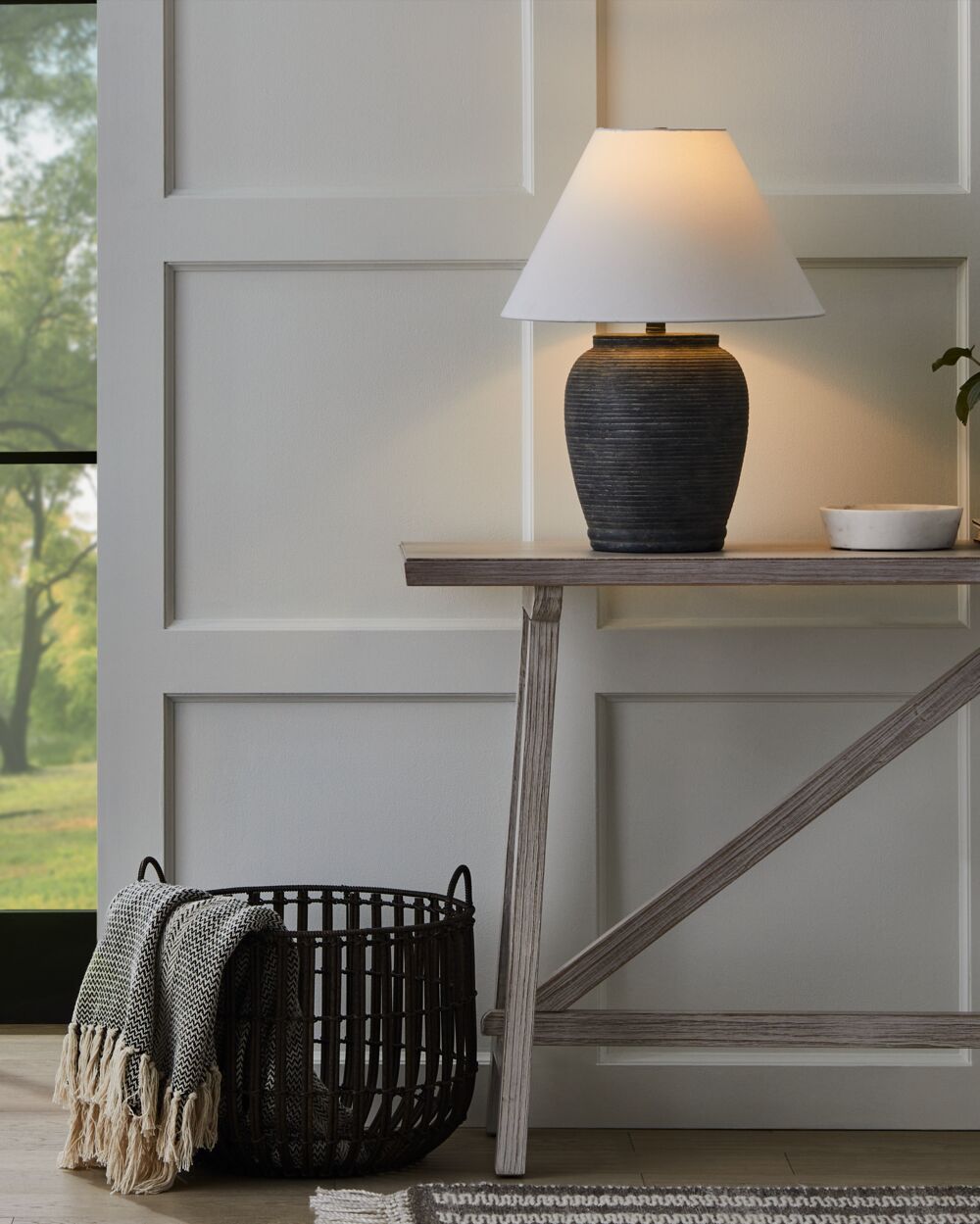
Lighting has a major effect on how a room looks, feels, and functions. It can make a hallway feel more welcoming, a kitchen more practical, a bedroom more relaxing, or a dining room more atmospheric. But with so many pendants, chandeliers, sconces, ceiling lights, and lamps to choose from, finding the right lighting style can quickly feel overwhelming.
A good fixture should do more than look beautiful on its own. It should work with the architecture of the room, support the way you use the space, and add the right mood at the right time of day. This guide breaks down how to choose a lighting style that feels natural in your home.
Start with the room
Before choosing a fixture, think about where it will go and what the room needs from the light. A kitchen requires practical task lighting for cooking, prep, and clean-up. A dining room needs enough light for meals, but also the ability to feel softer and more atmospheric. A bathroom needs clear, flattering light at the vanity. A bedroom often benefits from warmer, lower lighting that helps the room feel calm.
The room’s size and ceiling height matter too. A large open living room may need several types of lighting to feel balanced, while a small entryway might only need one well-scaled fixture to create impact. In a room with low ceilings, a flush mount or semi-flush mount can provide style without taking up too much visual space. In a room with higher ceilings, a chandelier or pendant can help fill the vertical space.
Choose a fixture type
Different lighting categories serve different roles. Understanding the main types can make it easier to choose the right lighting style for each room.
Chandeliers work well in dining rooms, principal bedrooms, living rooms, and entryways. They create a central focal point and can make a room feel more finished.
Pendants are useful over kitchen islands, dining tables, bedside areas, and small entryways. They can be used alone or in multiples, depending on the size of the space.
Flush mounts and semi-flush mounts are practical for hallways, bedrooms, closets, powder rooms, and rooms with lower ceilings. They provide overhead light without requiring as much ceiling height.
Sconces add a softer layer of light and can be used in bathrooms, hallways, bedrooms, dining rooms, and living rooms. They are especially useful when you want to free up surface space or frame a mirror, bed, fireplace, or piece of art.
Table lamps and floor lamps bring lighting closer to where it is needed. They add warmth, help create cozy pools of light, and can make a room feel more layered.
Look at your finishes
Your existing finishes can help narrow the direction. If the room already includes brass, warm wood, and cream or taupe tones, a warm metal finish may feel natural. If the room has black accents, grey upholstery, polished nickel, or a cooler palette, a matte black, chrome, or nickel fixture may be a better fit.
The lighting does not need to match every metal in the room. In fact, mixing finishes can make a space feel more collected. The key is to repeat each finish at least once so it feels intentional. A black chandelier can connect to black window frames or cabinet hardware. A brass sconce can relate to a mirror frame, picture light, or decorative object. A nickel vanity light can work beautifully with polished faucets and cabinet pulls.
Material also matters. Glass can feel light and open. Metal can feel crisp or industrial, depending on the shape. Fabric shades soften the room. Wood or woven details can add warmth and texture.

Consider the shape
The silhouette of a fixture is often what defines its style. A globe shade feels soft and classic. A dome pendant can feel clean and modern. A linear chandelier works well over long dining tables or kitchen islands. A lantern shape can bring structure to an entryway or hallway. A sculptural fixture can make a room feel more expressive.
Look at the shapes already in the room. If the furniture is mostly straight-lined, a round or curved fixture can add softness. If the room already has many curves, a more architectural light can create contrast. In a traditional space, a clean-lined fixture can make the room feel fresher. In a modern room, a classic shape can add warmth and balance.
This is where personal style comes in. The right lighting style should feel connected to the rest of the room, but not so predictable that it disappears.
Pay attention to scale
Even the right fixture can feel off if the scale is wrong. A light that is too small may look underwhelming, while one that is too large can overwhelm the room or interrupt sightlines.
In a dining room, the fixture should relate to the size and shape of the table. In a kitchen, pendants should feel proportional to the island and spaced evenly. In a hallway or entry, the light should suit the ceiling height and allow enough clearance. In a bathroom, vanity lighting should be positioned to provide useful, flattering light without creating harsh shadows.
If you are choosing lighting online, check the dimensions carefully before buying. It can also help to tape out the width of a fixture or hold up a simple paper template to understand how it will feel in the room.
Layer different kinds of light
One fixture rarely does everything. A room usually feels best when it has a mix of ambient, task, and accent lighting.
Ambient lighting is the overall light in the room. This often comes from ceiling fixtures, pot lights, or chandeliers.
Task lighting supports specific activities, such as reading, cooking, grooming, or working. Table lamps, desk lamps, under-cabinet lighting, and vanity lights all fall into this category.
Accent lighting adds atmosphere and highlights design details. Sconces, picture lights, small lamps, and directional lighting can help bring attention to art, bookshelves, architectural features, or decorative objects.
Layering gives you flexibility. A kitchen can be bright during food prep and softer in the evening. A living room can be functional for reading but still feel relaxed when the overhead lights are off. A bedroom can have bright light when needed, then shift to a softer glow before bed.
Choose bulbs carefully
The bulb can change the way a fixture looks and how the room feels. Warm white bulbs, often around 2700K, tend to work well in living rooms, bedrooms, dining rooms, and other spaces where comfort matters. They create a softer, more inviting glow.
Cooler or brighter bulbs can work in kitchens, bathrooms, laundry rooms, and workspaces, but they should still feel comfortable. Light that is too cool can make a room feel harsh, especially in the evening.
Dimmers are also worth considering. They make lighting more flexible and allow the same fixture to shift from practical to atmospheric throughout the day.
Let the room guide the style
Choosing a lighting style is not about following one look throughout the entire home. It’s about creating a sense of connection. Fixtures can vary from room to room, but they should share something in common, whether that is finish, shape, material, scale, or overall mood.
A home might include a sculptural chandelier in the dining room, simple pendants in the kitchen, and soft lamps in the living room. As long as the pieces relate to the architecture and palette, the result can feel cohesive without being too matched.
The right lighting style should make a room feel more useful, more comfortable, and more complete. Start with the room’s function, then consider mood, fixture type, finish, shape, scale, layering, and bulbs. When all of these details work together, lighting becomes more than a finishing touch. It becomes part of how the room lives every day.
Photography by A Plus Creative (1), Stacey Brandford (2)
