
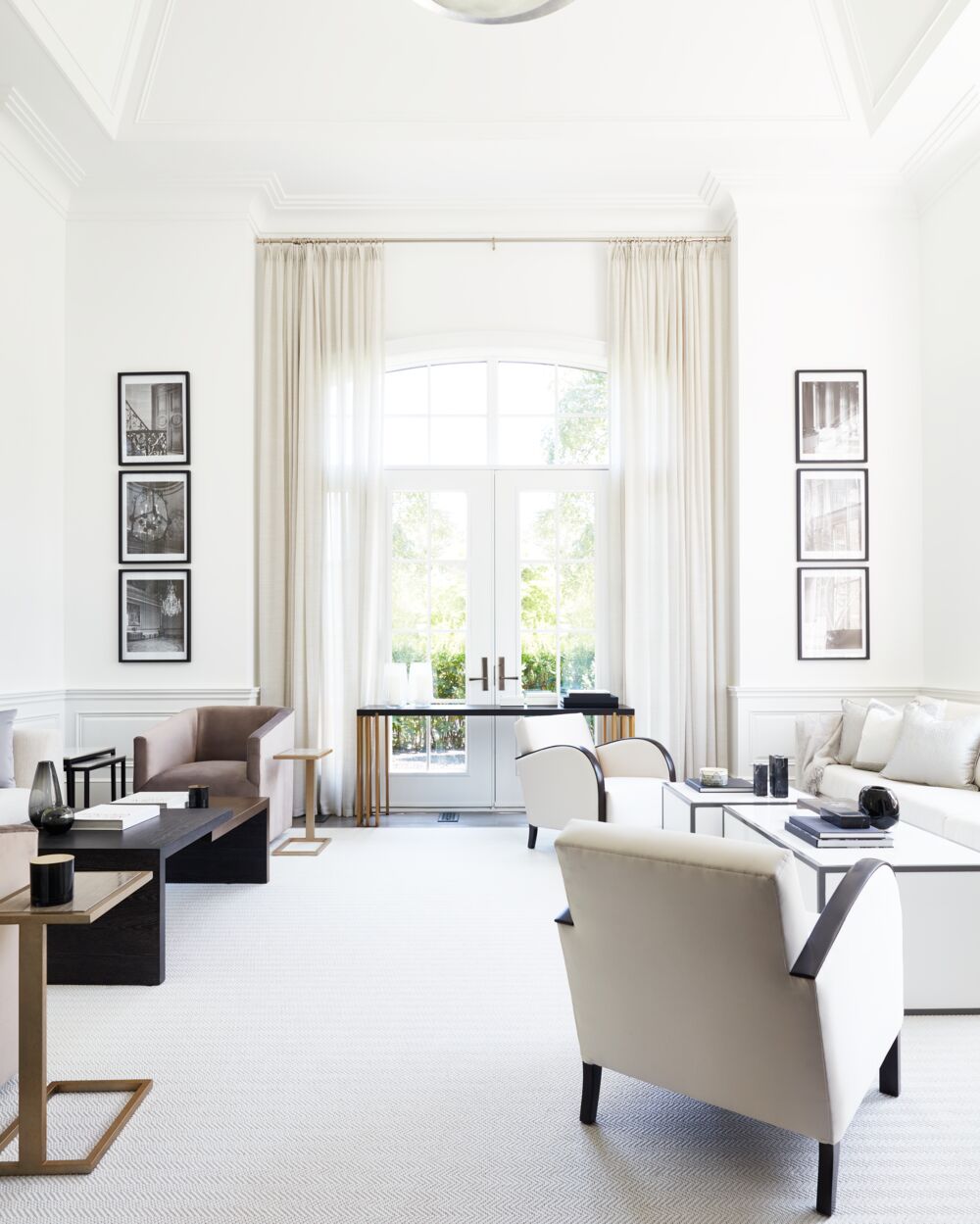
Drapery can completely change the way a room feels. It softens hard edges, frames the windows, adds texture, and can make ceilings feel higher when it’s hung well. But hanging drapery is also one of those design details where small mistakes are easy to notice.
Panels that are too short can make a room feel unfinished. A rod that’s too low can make the ceiling feel lower. Drapery that isn’t wide enough can look skimpy, even when the fabric itself is beautiful. The good news is that most of these issues are easy to avoid with a few simple measuring and hanging guidelines.
Start with the purpose of the drapery
Before measuring, think about what the drapery needs to do. Is it mainly decorative? Does it need to filter daylight? Should it provide privacy? Does the room need blackout or room-darkening coverage?
In a living room or dining room, drapery is often used to soften the windows and add texture. Sheer or light-filtering panels can work well when privacy and light control are not the main concerns. In a bedroom, drapery may need to block more light and create a quieter, more cocooned feeling. In that case, lined, opaque, room-darkening, or blackout panels may be more practical.
The room’s function should guide the fabric, opacity, hardware, and fullness before you make any other decisions.
Choose the right hanging style
The heading style affects both the look and the way the drapery functions. Some styles feel more tailored, while others are softer or more casual.
Back tabs create a clean, structured look because the fabric hides the rod from the front. This works well when you want the drapery to feel simple and polished.
Rod pockets have a more traditional look. The rod slides through a sewn pocket at the top of the panel, creating soft gathering across the fabric. They can work nicely in rooms where the drapery is more decorative than functional, but they’re not always the easiest option if the panels need to open and close often.
Clip rings are one of the most flexible options. They make drapery easier to move along the rod and can add a decorative detail through the hardware finish. They’re especially useful when you want a slightly more relaxed look or need panels that function every day.
Measure the window first
A good drapery hanging guide starts with accurate measurements. Measure the full width of the window, including the trim, then measure the height from the floor to the point where the rod will sit.
It’s also helpful to measure the wall space around the window. Check how much room there is above the trim, how much wall space is available on either side, and whether there are any obstacles such as sconces, built-ins, radiators, vents, or furniture.
Do this before buying panels or hardware. Drapery depends on both the window size and the wall around it, so the right measurements will help you choose the correct rod length, panel width, and panel length.
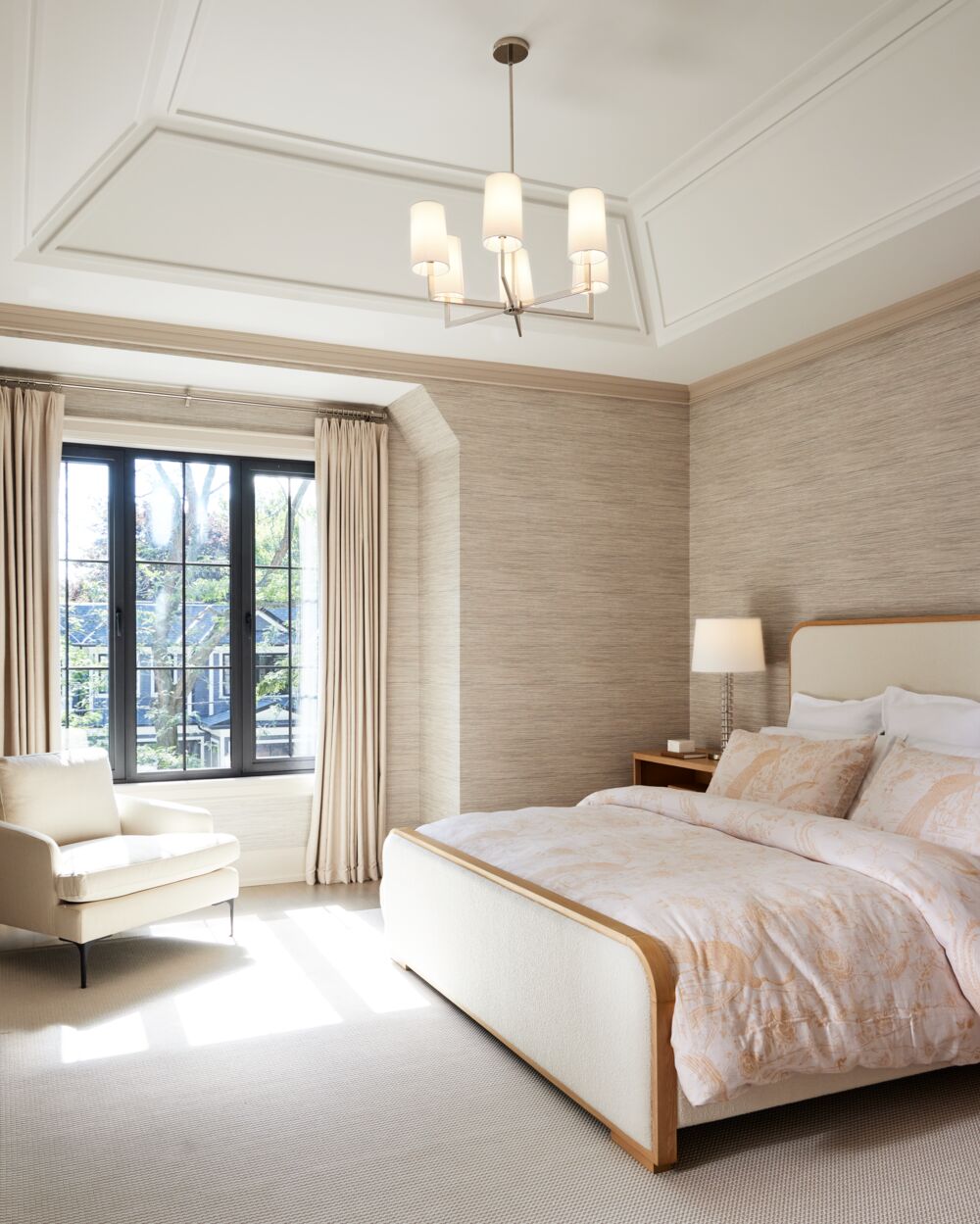
Hang the rod higher
One of the most common mistakes when hanging drapery is placing the rod too close to the top of the window frame. This can make the window feel smaller and the ceiling feel lower.
In most rooms, the rod should sit several inches above the window trim. If there is a lot of wall space between the window and the ceiling, aim for a point that feels balanced within that space. Hanging the rod higher helps draw the eye up and gives the room a more polished, elongated look.
In rooms with very tall ceilings, the rod does not always need to go all the way to the ceiling. The goal is to create height while still keeping the window treatment in proportion with the room.
Extend the rod wider than the window
The rod should extend beyond the window frame on both sides. This gives the panels room to stack when they’re open and allows more natural light to come through the window.
If the rod is too narrow, the panels will cover part of the glass even when open. This can make the window feel smaller and reduce daylight. Extending the rod wider makes the window feel larger and gives the drapery a more generous look.
As a general guide, allow several extra inches on each side of the window. Larger windows, wider walls, or heavier fabrics may need more space.
Choose enough fabric width
Drapery should look full, not flat. If the panels are only just wide enough to cover the window, they may look thin when closed and underwhelming when open.
For a fuller look, the total fabric width should usually be wider than the window itself. The exact amount depends on the fabric, heading style, and how much fullness you want, but the principle is simple: drapery needs extra width to create soft folds.
This is especially important with lightweight fabrics, which can look sparse without enough fullness. Heavier fabrics may need less gathering, but they should still have enough width to hang with depth and movement.
Get the length right
Length is one of the most important details in hanging drapery. Panels that are too short can make the room feel unfinished. Panels that puddle too much can look heavy and are harder to keep clean.
For most rooms, drapery should just touch the floor or hover slightly above it. This creates a tailored look that works well in living rooms, dining rooms, bedrooms, and home offices.
A small break at the floor can feel soft and more traditional. If you want a clean, timeless look, keep the hem close to the floor without excess fabric pooling.
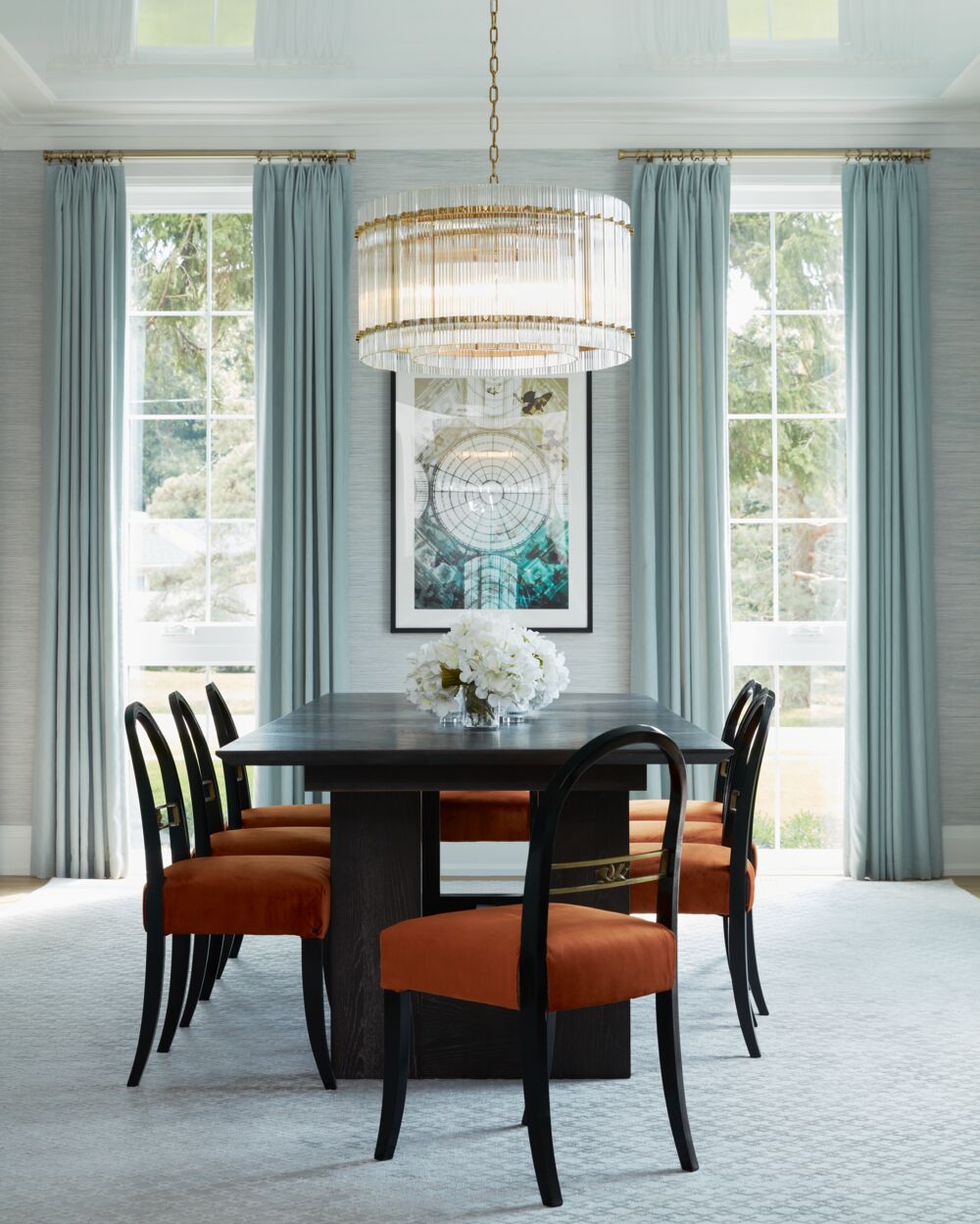
Consider the fabric and opacity
Fabric affects the mood of the room as much as the function. Linen and linen-look fabrics feel relaxed and airy. Cotton blends can feel crisp and versatile. Velvet or heavier woven fabrics add warmth, softness, and a more substantial look.
Opacity matters too. Sheer panels filter light and create softness, but they don’t offer much privacy at night. Light-filtering panels provide a bit more coverage while still allowing some daylight through. Room-darkening or blackout panels are better for bedrooms, nurseries, media rooms, or any space where light control is important.
Brian Gluckstein’s tip: For more flexibility, layer sheer panels with heavier drapery. The sheer layer softens daylight during the day, while the heavier panels can be drawn for privacy or light control.
Coordinate colour with the room
Drapery can blend into the room or become more of a design feature. Both approaches can work.
For a quiet, seamless look, choose drapery close to the wall colour. This helps the room feel calm and cohesive, especially when the windows are large or there are several of them in one space.
For more contrast, choose a deeper colour, visible texture, or subtle pattern. This can help frame the windows and add interest to a neutral room. If the room already has a lot of pattern or colour, simpler drapery may be the better choice.
When hanging drapery, the hardware should also relate to the room. Matte black can feel crisp and graphic. Brass can add warmth. Nickel or chrome can feel lighter and more classic. The finish does not need to match every other metal exactly, but it should feel connected to something else in the room.
Avoid blocking the window
When drapery is open, it should frame the window rather than cover too much of the glass. This is why rod width matters so much. The panels need somewhere to go.
Before installing the hardware, consider where the fabric will stack. If the wall space beside the window is limited, choose a lighter fabric or a less bulky heading style. If the window is wide or the fabric is heavy, allow more rod extension on each side.
Good drapery should add softness and style without making the room feel darker than necessary.
Know when custom may be worth it
Ready-made panels can work well when the window dimensions align with standard sizes. They’re often a practical choice for simple updates, secondary rooms, or spaces where the exact fit is less complicated.
Custom drapery may be worth considering for unusually tall ceilings, extra-wide windows, bay windows, arched openings, or rooms where light control is especially important. It can also be helpful when you want a specific fabric, lining, heading style, or fullness.
The choice depends on the room, the budget, and how precise the finished look needs to be.
Drapery is one of the details that can make a room feel more finished, but it works best when the measurements are right. Start with the function of the room, then choose the right opacity, fabric, hanging style, rod placement, width, and length. With a thoughtful approach to hanging drapery, the windows can feel softer, taller, and better connected to the rest of the space.
Photography by Angus Fergusson (1), Stacey Brandford (2), Kim Jeffery (3)
