
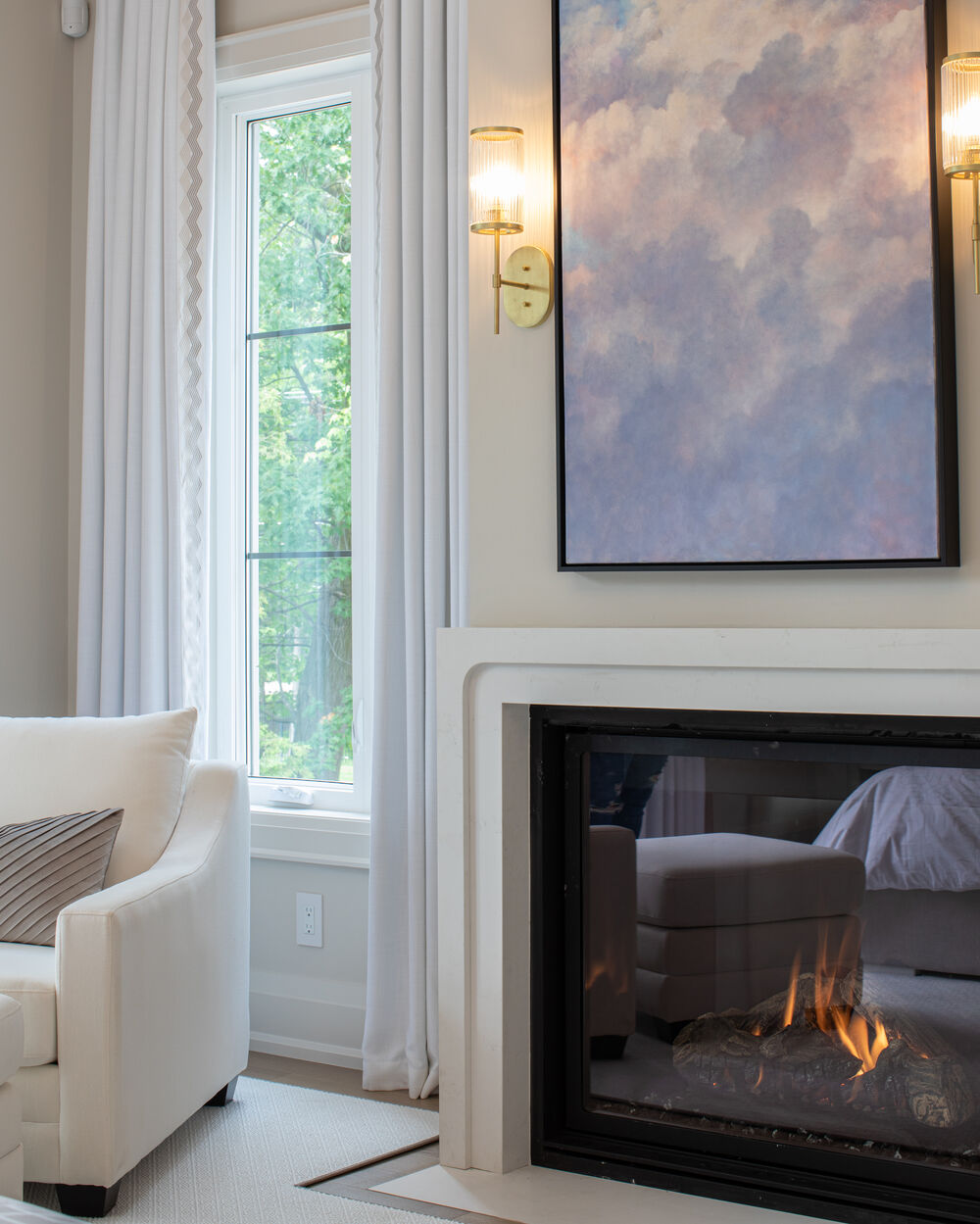
When interior designer Brian Gluckstein walks into a room, he’s not only looking at the furniture or the colour palette. He’s looking at how the space feels, how the pieces relate to one another, and whether the details support the way people actually live. Often, what interior designers notice first are the quiet choices: proportion, lighting, balance, comfort, and the personal details that give a room character.
These elements may not stand out right away, but they shape the entire experience of a space. A room can have beautiful furniture and finishes, but if the scale feels off, the lighting is too harsh, or the layout doesn’t feel natural, something will always seem unfinished. Here are the design details Brian often notices first, and why they make such a difference.
The proportion of furniture
Scale is one of the first things Brian notices because it affects both comfort and flow. A sofa that’s too small can make a living room feel under-furnished. A coffee table that’s too large can make the space difficult to move through. A rug that does not extend far enough under the furniture can make the whole seating area feel disconnected.
Good proportion isn’t about following a rigid formula. It’s about how the pieces relate to one another and to the room itself. In a living room, the coffee table should feel connected to the sofa. Side tables should be easy to reach. Chairs should be placed close enough for conversation. In a dining room, there should be enough space around the table for chairs to move comfortably.
When the scale is right, the room feels easy to use. Nothing feels crowded, floating, or out of place.
Whether the lighting feels comfortable
Lighting is one of the details that can change a room immediately. Brian often notices whether the light feels warm and layered, or whether the room is relying too heavily on one overhead fixture. Even a well-decorated space can feel flat if the lighting is too bright, too cool, or too limited.
A comfortable room usually has more than one source of light. Ceiling fixtures or recessed lights can provide general illumination, but table lamps, floor lamps, sconces, and accent lights bring softness and flexibility. A lamp beside a reading chair, sconces flanking a mirror, or a pendant centred over a dining table can make the space feel more intentional.
Dimmers are also important. They allow the mood of a room to shift throughout the day, from bright and practical to soft and relaxed. That kind of flexibility is often what interior designers notice because it affects how a room actually feels to live in.
How the room is anchored
A room needs something to ground it. Sometimes that’s a rug. Sometimes it’s a strong furniture arrangement, a focal point, or a repeated material that gives the space structure. Without that anchor, even attractive pieces can feel scattered.
Brian often looks at whether the main elements of the room feel connected. In a living room, a properly sized rug can pull the seating area together. In a bedroom, the bed usually acts as the anchor, supported by bedside tables, lighting, and soft layers. And in a dining room, the table, chairs, rug, and lighting should feel like one complete composition.
A rug can be especially effective because it defines an area, adds softness, and introduces texture. When it’s too small, the furniture can seem as though it’s floating. When it’s properly scaled, the room feels grounded and more cohesive.
Whether the room feels personal
A room can be well decorated and still feel impersonal. Often what interior designers notice is whether there’s something in the space that tells a story. It can be a piece of art, a collection of books, a vintage chair, framed family photos, or an object picked up while travelling.
These personal details keep a room from feeling too perfect or too newly decorated. They add history, individuality, and warmth. They also create natural conversation points, which makes the space feel more lived-in.
The key is to edit thoughtfully. A few meaningful objects will usually have more impact than many small accessories. Place them where they can be seen and appreciated, such as on a console, bookshelf, coffee table, bedside table, or mantel.
The mix of old and new
Rooms are often more interesting when they don’t feel as though everything was chosen at the same time. Brian frequently looks for a mix of old and new pieces because that contrast gives a room depth.
A clean-lined sofa can sit beside a traditional chair. A contemporary light fixture can work above an antique table. A vintage mirror can add character to a modern entry. These combinations help a room feel collected over time rather than assembled all at once.
The mix doesn’t need to be dramatic. Even one or two pieces with age, patina, or a different point of view can change the feeling of a space. Smooth surfaces feel richer beside natural texture. Modern lines feel warmer when paired with something aged or handcrafted. That sense of contrast is often what interior designers notice when a room has personality.
What’s been edited out
Editing is one of the quietest design decisions, but it can have a major impact. Brian often notices when a room has enough breathing room. Too many accessories, too much furniture, or too many competing focal points can make a space feel busy, even if every individual piece is attractive.
Editing doesn’t mean making a room feel minimal. It means giving the strongest pieces enough space to stand out. A coffee table might need fewer objects. A bookshelf might need a mix of books, art, and open space. A room with strong colour or pattern may need quieter pieces nearby to create balance.
When a room has breathing room, the details become easier to appreciate. The art feels more intentional, the furniture has more presence, and the overall mood feels calmer.
How the room connects to the rest of the home
Brian also looks at whether a room feels connected to the rest of the home. That doesn’t mean every space should look the same. It means there should be some sense of continuity through colour, materials, finishes, or mood.
A repeated metal finish, a consistent trim colour, similar wood tones, or a related palette can help rooms flow together. In an open-concept space, this is especially important. But even in separate rooms, small connections help the home feel more cohesive.
Continuity also makes it easier to update a home over time. When the foundation is thoughtful and connected, new pieces can be added without making the space feel disjointed.
In the end, what interior designers notice first is not always the most obvious feature in the room. It is often the relationship between the details: the scale of the furniture, the comfort of the lighting, the way the room is anchored, and the personal touches that make it feel lived in. When those choices work together, a room becomes more than attractive. It feels balanced, comfortable, and personal in a way that lasts.
Photography by Brittany Townsend
