
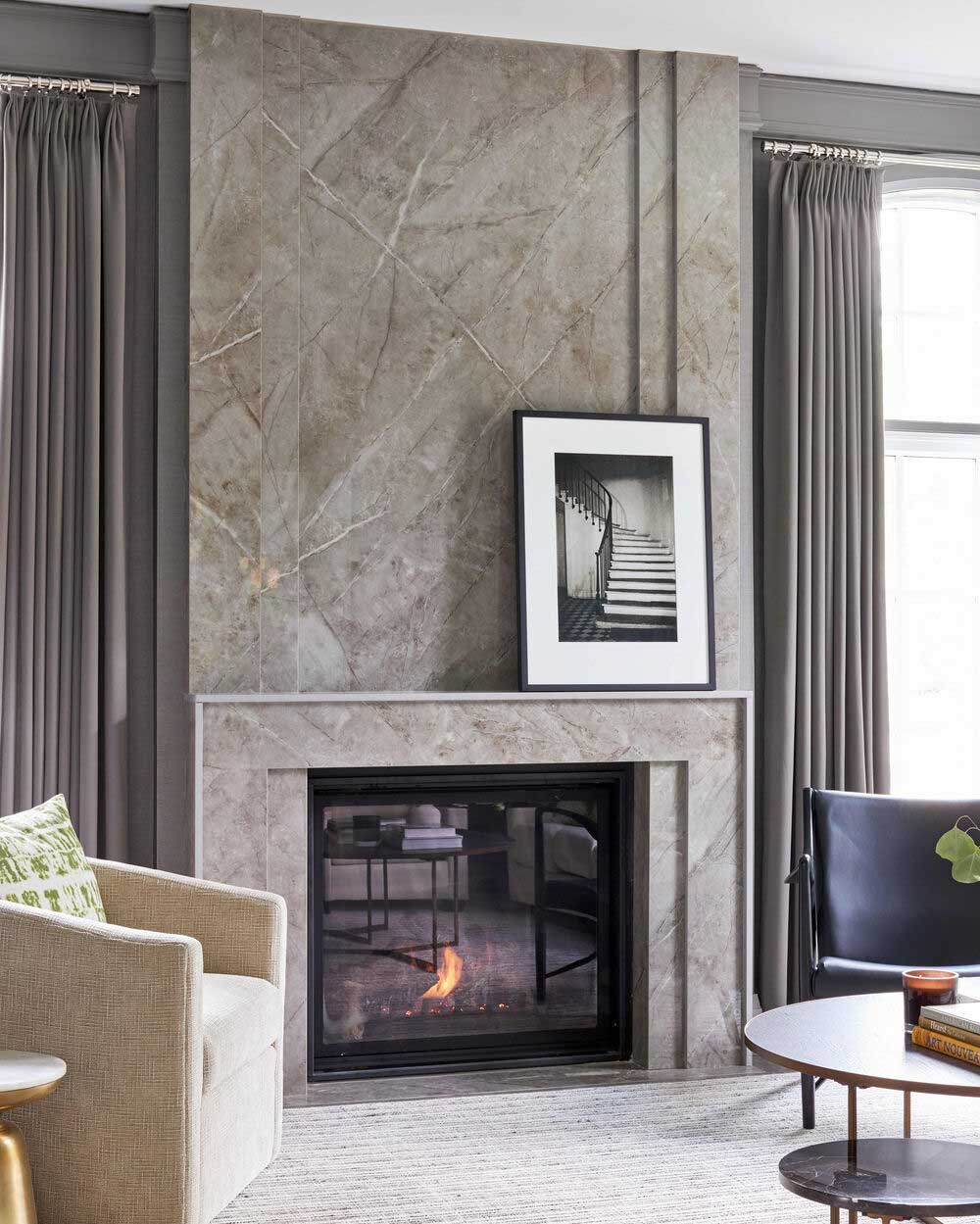
A room can have the right furniture, palette, and layout and still feel as though something is missing. Often, it isn’t another major purchase that brings the design together. It’s the small design details: the height of the artwork, the fullness of the drapery, the way finishes repeat, or the amount of space left around a carefully chosen object.
These are the elements that interior designer Brian Gluckstein pays attention to when refining a home. Individually, they can seem minor. Together, they create a sense of intention and help a room feel polished without making it feel overly decorated. Here, Brian shares six small details worth a second look—and the simple adjustments that can make an entire room feel more resolved.
1. Hang artwork in relationship to the furniture
Artwork should feel connected to the pieces around it rather than floating independently on the wall. Brian often looks at the relationship between a frame and the sofa, console, or table below it. If the gap is too large, the composition can feel disconnected. If the artwork is undersized, even a beautiful piece may lose its impact.
Think of the furniture and artwork as one grouping. A single large work can establish a strong focal point, while several smaller pieces can be arranged as a balanced collection. The exact height may vary, but the centre of the artwork should generally feel comfortable to view rather than forcing the eye upward.
2. Give drapery enough height and fullness
Window treatments have a much greater presence when the fabric feels generous. Panels that are too narrow can look flat and unfinished, even when the material itself is beautiful. Brian prefers drapery that has enough fullness to hold soft folds when closed and still frame the window when open.
Hanging the rod above the window can also emphasize the height of the room, while panels that reach the floor create a cleaner, more continuous line. These subtle adjustments make the window feel more substantial and bring another layer of softness to the space.
3. Repeat a finish, colour, or material
Repetition is one of the small design details that quietly creates cohesion. A metal finish introduced in a light fixture might appear again in a piece of hardware. A colour from the artwork can return in a cushion or decorative object. A warm wood tone can be echoed elsewhere without every piece matching exactly. A patterned area rug can also pick up colours used throughout the room, helping the furniture, artwork, and accessories feel more connected.
Brian uses repetition to create connection, not uniformity. Two or three thoughtful references are usually enough to make a choice feel intentional. The room gains a visual rhythm while still leaving space for contrast and variety.
4. Layer lighting at different heights
Good lighting is not only about brightness. It also determines where the eye travels and how the room feels at different times of day. A ceiling fixture provides general illumination, but lamps and sconces bring light closer to eye level and soften the atmosphere.
For Brian, the most comfortable rooms include several sources of light. A table lamp can give a console or side table greater presence. A floor lamp can balance an empty corner. Focused lighting can highlight artwork, shelves, or an architectural detail. Each layer has a purpose, but together they make the room feel more complete.
5. Treat hardware as part of the design
Handles, knobs, hooks, and drapery hardware are touched and seen every day, yet they’re often selected as an afterthought. Their scale and finish can reinforce the overall direction of a room. Streamlined hardware supports a cleaner look, while a more substantial profile can add weight and character.
The hardware doesn’t need to match every other metal exactly. What matters is that the finishes feel related and that the proportions suit the furniture, cabinetry, or window. This is an opportunity to introduce a refined detail without changing the larger elements of the room.
6. Leave some surfaces intentionally quiet
Finishing a room doesn’t mean filling every table, shelf, and wall. Brian often uses restraint to give important pieces more impact. A few objects with varied heights and shapes will usually feel stronger than many small accessories spread evenly across a surface.
Editing is one of the most effective small design details because it creates breathing room. Remove anything that doesn’t contribute to the composition, then look at the balance of what remains. The goal is not to make the room sparse. It’s to give the eye places to rest and allow the pieces you care about to stand out.
A polished home is built one detail at a time
The finishing touches in a home don’t need to be complicated or expensive. They need to feel deliberate. Adjusting the artwork, adding fullness at the windows, repeating a material, or editing a crowded surface can change the way the entire room reads.
Brian Gluckstein’s approach to small design details is ultimately about creating connection. When the elements relate to one another in scale, colour, material, and placement, a home feels more resolved and much more personal.
Photography by Jason Hartog
