
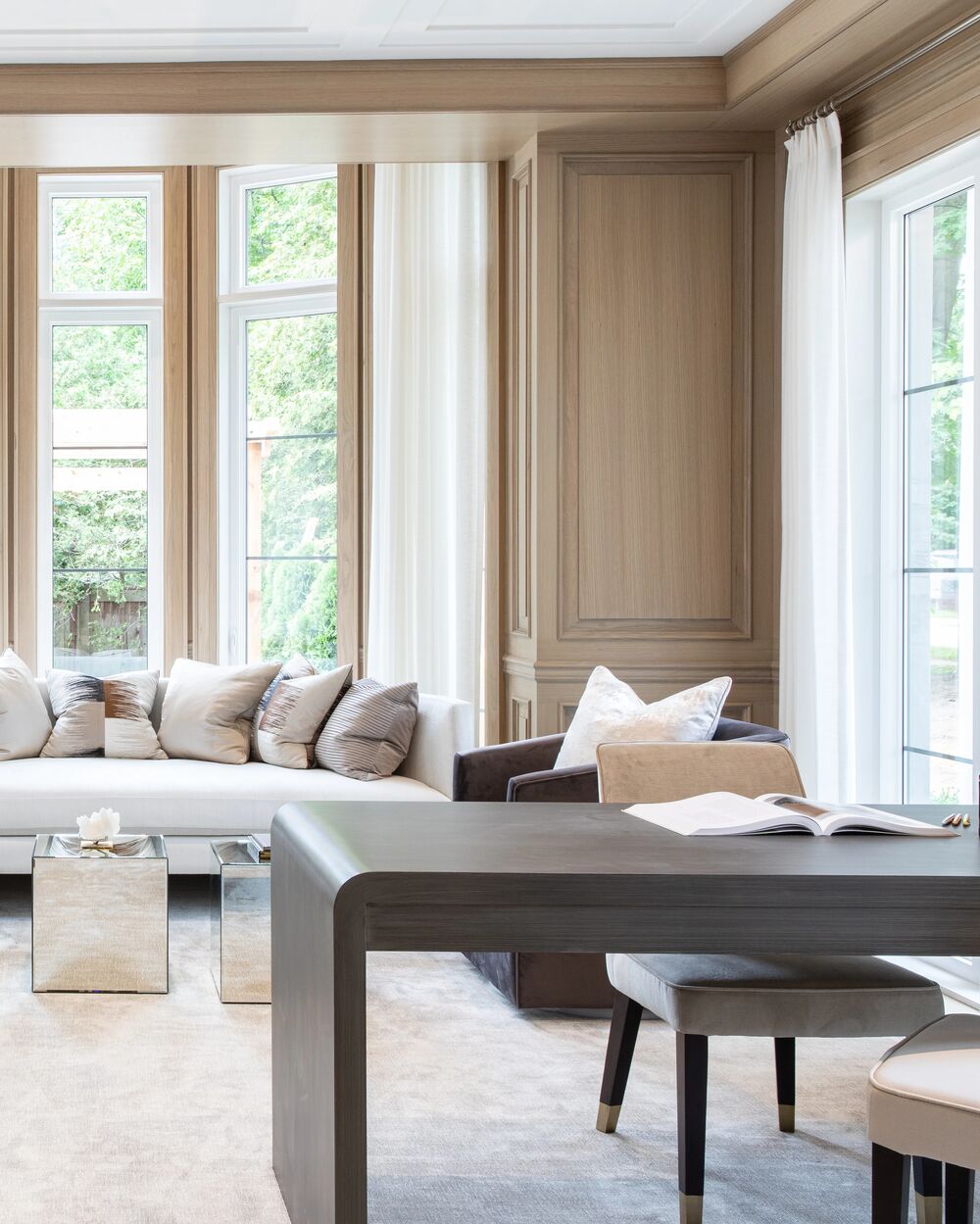
Can you mix different wood tones in the same room? According to interior designer Brian Gluckstein, the answer is yes. In fact, combining wood finishes can give a space more depth, character, and a sense that it has evolved over time.
The goal is not to make every wood surface match. It’s to create enough connection between the different finishes that the overall room still feels balanced and intentional. From limiting the number of woods to paying attention to their undertones, Brian shares four principles for mixing wood tones successfully.
1. Keep it to two or three wood finishes
Mixing wood tones adds interest, but too many finishes can make a room feel busy or disconnected. Brian recommends limiting the palette to two or three woods, giving each one a clear role within the space.
Begin with the wood that already has the strongest presence. Flooring, cabinetry, wall panelling, and other architectural details will often establish the dominant finish. From there, introduce one or two complementary woods through furniture and smaller accents.
One finish should generally take the lead, while the others play supporting roles. In a room with light oak panelling, for example, a darker table can add contrast and help ground the space. Repeating that darker finish on chair frames, furniture legs, or smaller details will make the combination feel more considered.
2. Make sure the finishes are actually different
When mixing wood tones, Brian suggests choosing finishes with enough contrast that they look intentionally paired. Two shades that are almost, but not quite, the same can make it appear as though you tried to match them and missed.
Instead, allow the differences to be clear. Pale oak can sit beautifully alongside deep brown or black wood, while a medium finish can provide a transition between light and dark elements. The contrast gives each piece its own presence and adds definition to the room.
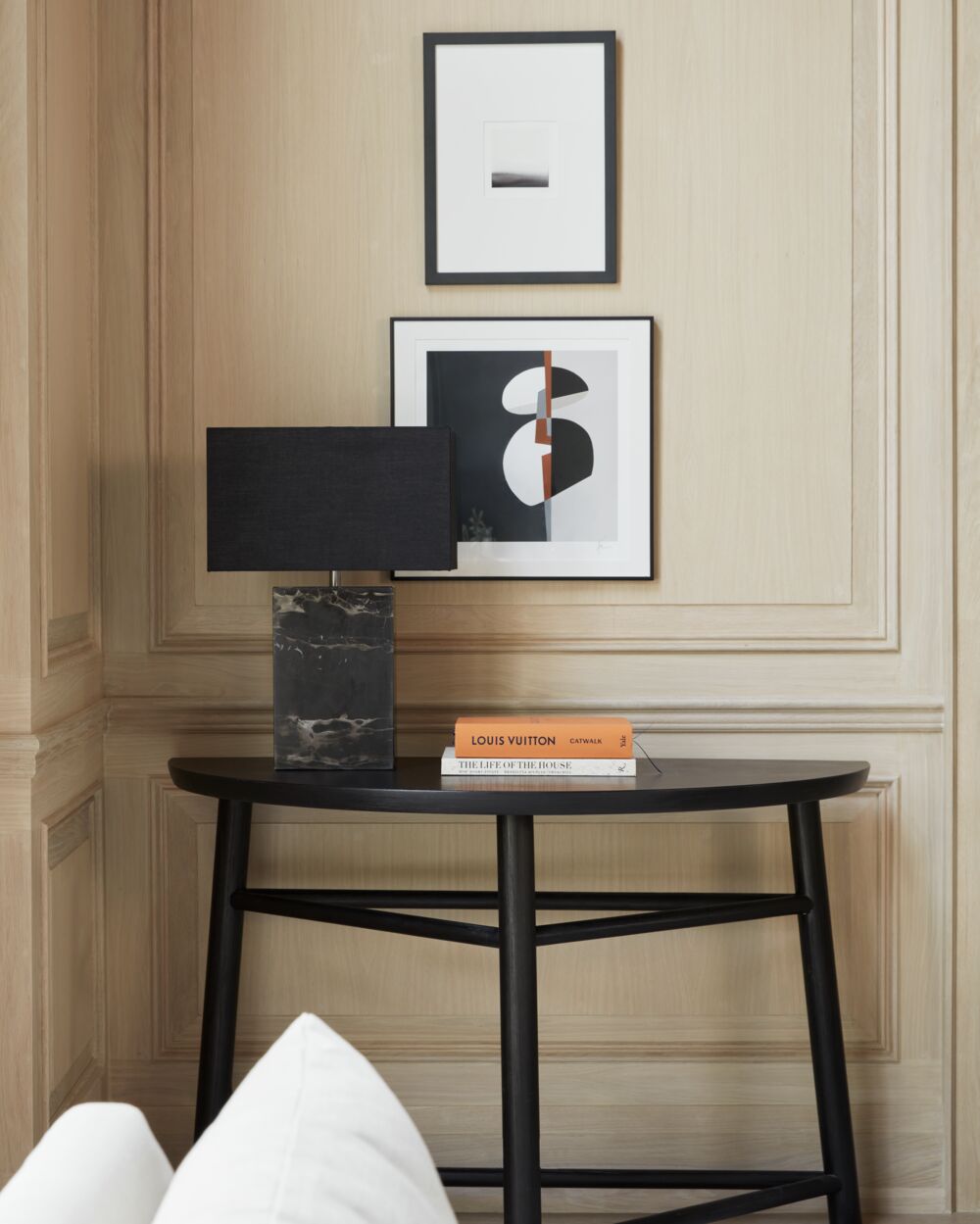
Scale also matters. A dark finish on one substantial piece, such as a dining table or console, can create a strong focal point. Smaller touches in the same tone can then help carry it through the space without making the room feel heavy.
3. Let grain and texture add variety
Colour is only one part of a wood finish. Grain, texture, and sheen can also help distinguish one wood from another and bring more dimension to a room.
A wood with a strong, visible grain can work alongside one with a smoother, more uniform appearance. Similarly, matte, wire-brushed, and polished finishes each interact with light differently. These variations allow several woods to coexist without feeling repetitive, even when their colours are relatively close.
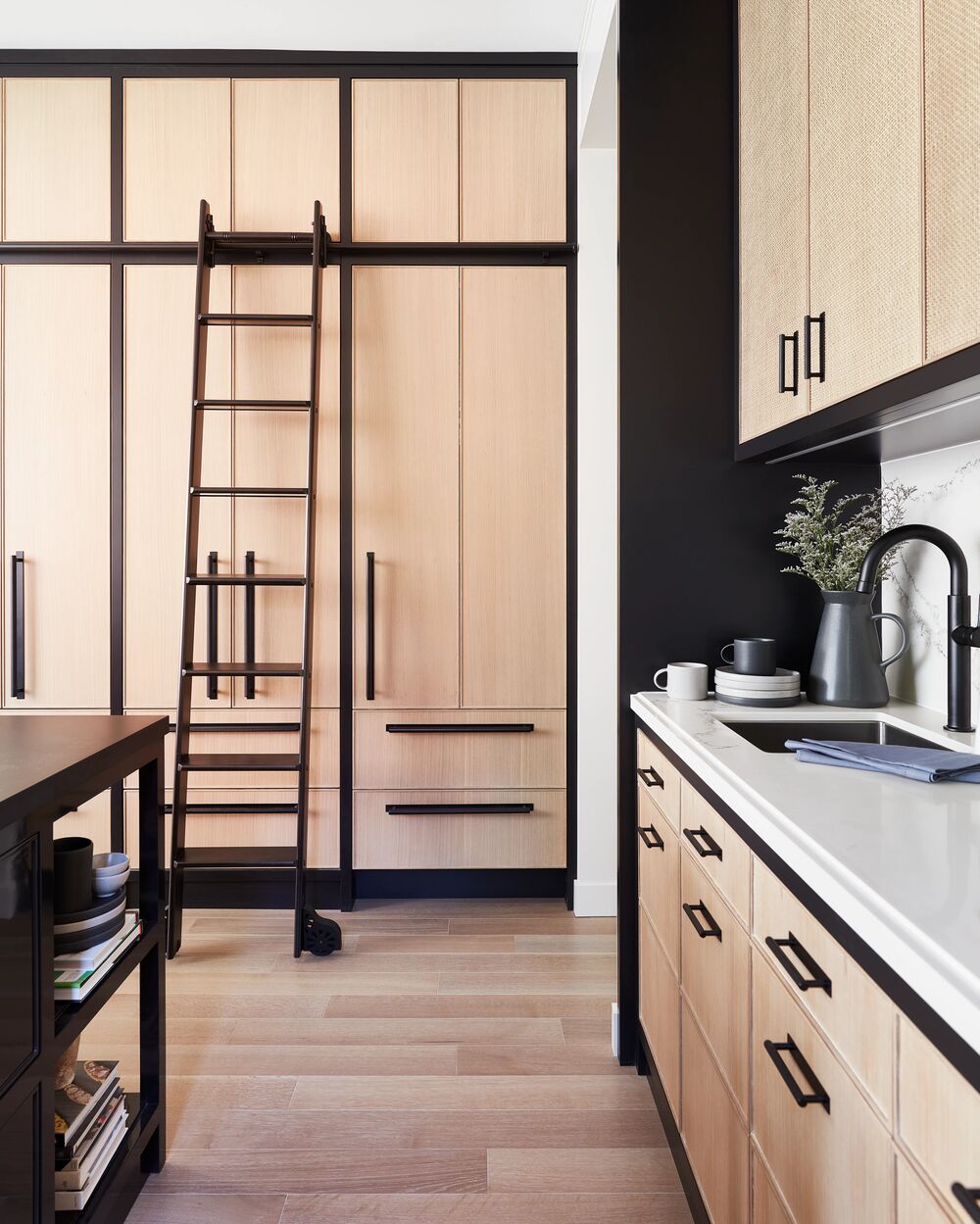
Other materials can help create separation, too. Stone, fabric, metal, and painted surfaces give the eye a place to rest and prevent the wood finishes from competing with one another. In a kitchen, pale cabinetry and wood flooring may feel more layered when balanced by dark hardware, a stone counter, or a contrasting furniture piece.
4. Keep the undertones in harmony
Different wood finishes don’t need to match, but their undertones should feel compatible. Most woods have warm, cool, or neutral undertones. Warm woods may lean golden, honey, or reddish, while cooler finishes tend to appear greyer or more muted.
Brian recommends looking at wood samples together in the room and in its natural light. This makes it easier to see whether their undertones relate. An orange-toned wood placed beside one with a strong grey cast may feel disconnected, while woods of different depths with similar warm undertones will usually sit together more naturally.
The surrounding colour palette can also create harmony. Warm whites, creams, and earthy neutrals complement golden woods, while cooler greys and crisp whites can work well with more muted finishes. Upholstery, rugs, and wall colour can help bridge the different tones and bring the room together. An area rug can be especially useful, creating a visual break between wood flooring and furniture while connecting the room’s overall palette.
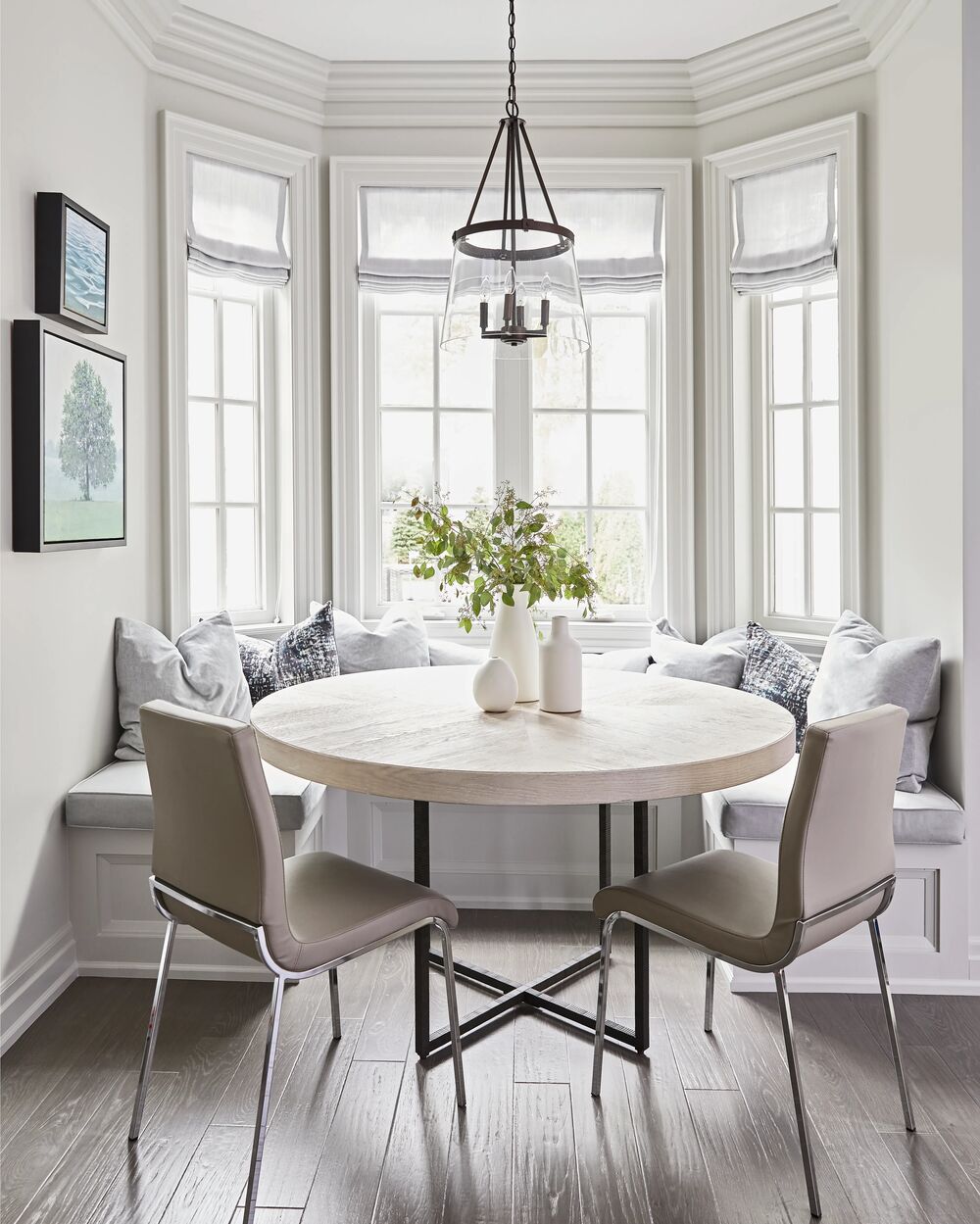
Mixing wood tones is less about finding a perfect match and more about creating balance. By limiting the number of finishes, choosing purposeful contrast, varying grain and texture, and keeping undertones in harmony, you can create a room that feels layered without losing its sense of cohesion.
A thoughtful mix also gives your home more freedom to evolve. New and existing pieces can sit comfortably together, creating an interior that feels collected, personal, and naturally developed over time.
Photography by Britney Townsend (1), Kim Jeffery (2), Angus Fergusson (3), A Plus Creative (4)
