
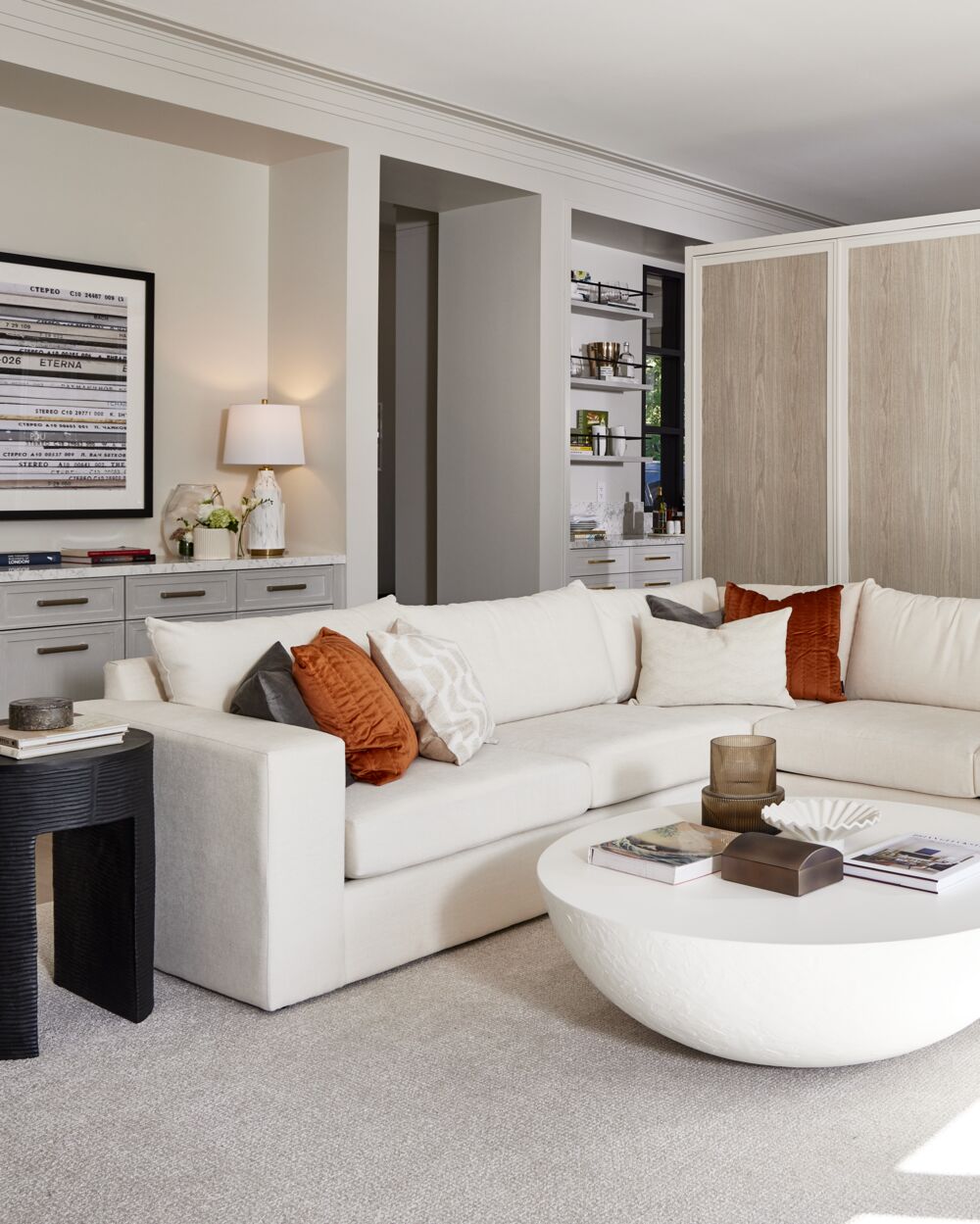
Most sofas end up in the same place for the same reason: it feels like the easiest option. Push it against a wall, centre the coffee table, call it done. But if your room feels a little flat, or your open concept space feels hard to zone, experimenting with sofa layouts is one of the simplest ways to change how the whole space functions.
A sofa doesn’t just provide seating. It sets the flow of the room. It can create a walkway, anchor a conversation area, or carve out a workspace without adding a single wall. The trick is to use the space around it, not ignore it.
Here are six sofa layout ideas to try when you want your room to feel more intentional, more functional, and a little more interesting.
1. Add a Desk Behind the Sofa
If you work from home (even part-time), the space behind your sofa can become a surprisingly polished work zone. A slim writing desk is usually the best fit, since it gives you function without making the room feel crowded. To keep sightlines clean, aim for a desk height that’s close to the height of the sofa back, and leave enough space behind the desk for a comfortable chair and a clear pathway.
The goal is to make the setup feel like it belongs in the room, not like an afterthought. A task lamp instantly signals purpose, while one decorative piece (a small bowl, a sculptural object, or a stack of books) helps it feel styled. And because the “office” parts are what can throw off the look, plan for simple concealment: a lidded box for cords, a drawer for supplies, and a catchall tray so the surface stays tidy.
2. Style a Console Table Behind the Sofa
A console table behind the sofa is one of the easiest ways to make a living room feel finished. It gives the sofa visual structure, adds a surface for lighting, and creates a natural spot for styling that doesn’t interfere with everyday use. It’s also a practical move in open concept spaces, where you want the back of the sofa to look intentional from every angle.
For the best proportions, choose a console that’s the same height as the sofa back or a few inches lower. Then treat it like a quiet anchor point rather than a display shelf. A lamp at one end creates warmth and balance, while a tray, books, or a low bowl at the other end keeps the styling grounded. It feels collected and casual, and it’s easy to update over time.
3. Use a Decorative Screen to Create a Zone
In open concept homes, a decorative screen can be a smart way to add separation without blocking light. It helps define the living area, creates a sense of privacy, and brings in pattern or texture in a way that doesn’t feel permanent. This layout is especially helpful when your sofa is doing a lot of work visually, but you still want the space behind it to feel considered.
Instead of placing the screen tight to the sofa, give it a little breathing room. Positioning it a foot or two back tends to look more relaxed and intentional, and it keeps the seating area from feeling boxed in. Screens with woven details, cane, or slatted wood can add warmth and depth, while painted or patterned options bring personality. It’s a small change, but it can make an open plan feel calmer and more defined.
4. Create a “Library” Moment
If a console table feels too light for your space, a low bookcase or closed cabinet behind the sofa can add both function and a more tailored look. This is a great option for family rooms and busy living spaces, where you want the room to feel elevated without having everything on display. It also gives the sofa a stronger backdrop, which can be helpful with larger sectionals or rooms with a lot of open floor area.
A low piece works best because it keeps the room feeling open while still providing storage you’ll actually use. Closed cabinetry is ideal for hiding games, throws, extra candles, and the everyday items that tend to collect in living spaces, while open shelving can work if you prefer a styled, book-forward look. Finish it like you would a console, with a lamp, a tray, and one or two objects that bring shape and texture, while leaving enough clear space so the sofa remains the focus.
5. Float the Sofa to Define the Area
Pulling the sofa off the wall is one of the fastest ways to make a room feel more designed. It helps you create a true seating zone, and it can also solve the “empty middle” problem that happens in longer rooms when everything is pushed to the perimeter. In open concept layouts, floating the sofa is also an effective way to define the living space while keeping the overall plan open and airy.
The key is to make the placement feel deliberate. Start by thinking about traffic flow and leaving a comfortable walkway behind the sofa, rather than squeezing it into the room. Then anchor the seating area with a rug that’s large enough to connect the pieces visually, so the sofa and chairs feel like they belong together. Once the sofa is floating, the space behind it becomes an opportunity: a console, a floor lamp, or a tall plant can help the back view feel finished and intentional.
5. Place a Sofa at the Foot of the Bed
In a bedroom, a sofa can be a luxurious alternative to a bench, especially if you want the seating to feel genuinely useful. It adds comfort and creates a secondary zone that makes the room feel more like a retreat. If your bedroom has enough depth, this is one of the most impactful layout moves you can make without changing anything architectural.
To keep it feeling light and appropriate to the space, choose a sofa with a slimmer silhouette and make sure you can still move easily around the foot of the bed. A small side table nearby gives you a place for a book, a morning coffee, or a candle, while a reading light makes it feel like a real sitting area rather than a purely decorative piece. It’s a simple shift, but it changes how the room functions, and it makes the bedroom feel more inviting throughout the day.
In the end, the best sofa layout is the one that supports how you actually live. Pay attention to where you walk through the room, where you tend to sit, and what you reach for most often. Then make one change at a time and live with it for a few days. Often, the right layout isn’t the most obvious one. It’s the one that makes the room feel easy.
Photography by Stacey Brandford
