
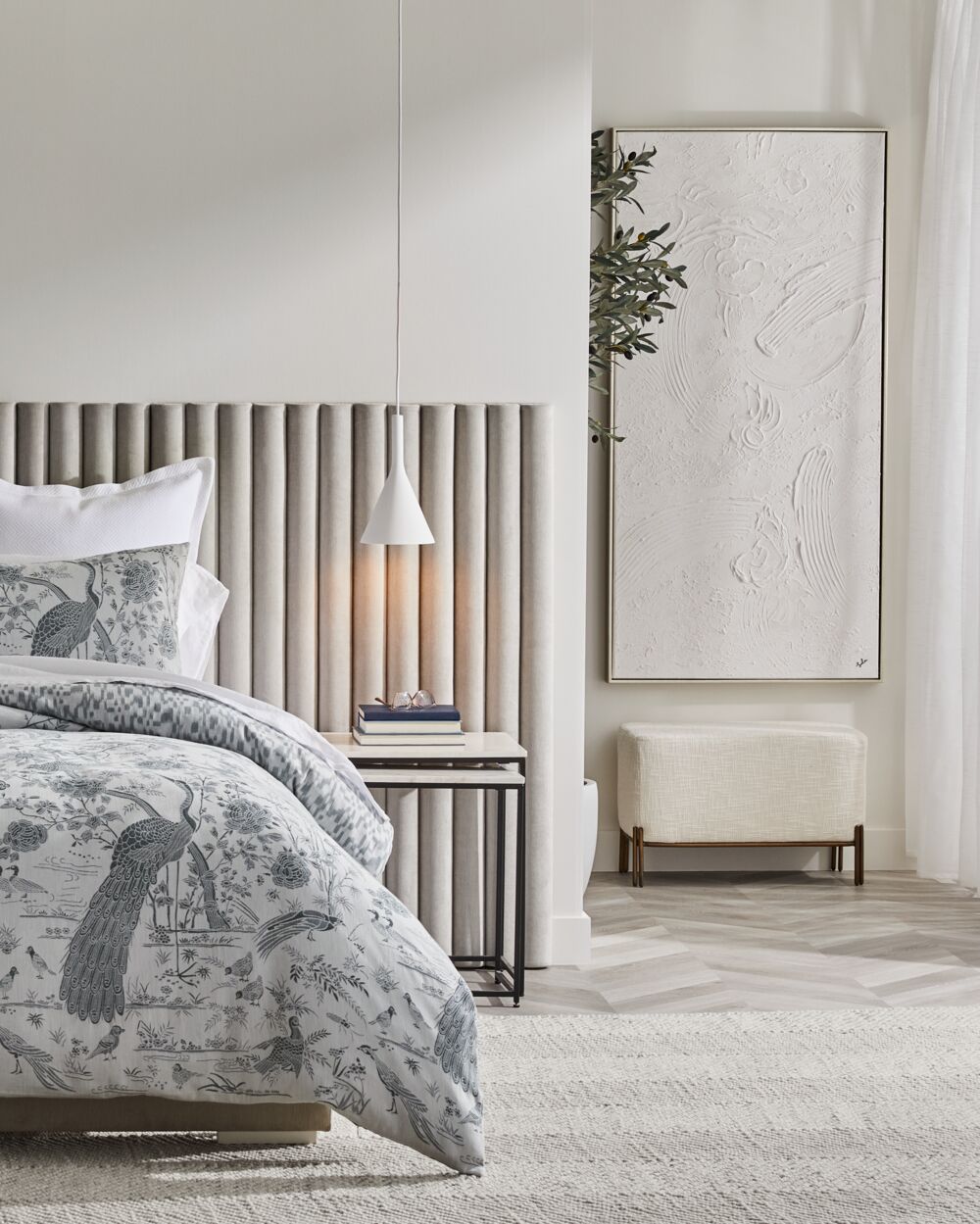
A transitional bedroom brings together the warmth and character of traditional design with the cleaner lines and lighter feeling of modern interiors. It’s an ideal approach if you appreciate classic details but want your space to feel fresh, comfortable, and suited to the way you live today.
The key to a successful transitional bedroom is balance. Instead of dividing the room between obviously traditional and modern pieces, look for elements that share a similar sense of scale, colour, or material. The result should feel collected and cohesive, with neither style competing for attention. Here’s how to create the look.
Mix styles with restraint
Transitional design allows you to combine pieces from different periods, but it isn’t as varied or unexpected as an eclectic room. The most effective combinations tend to pair the simpler side of traditional design with the softer side of modern style.
For example, an upholstered bed with tailored channel detailing can sit comfortably alongside streamlined nightstands. A classic wood dresser might be balanced by contemporary artwork, while a modern bench can introduce a cleaner silhouette at the foot of the bed.
Avoid filling the room with pieces that represent the extremes of either style. Furniture that’s highly ornate may compete with very minimal designs. Instead, look for shared qualities, such as a similar visual weight, repeated curves, or finishes that relate to one another.
Build a quiet, layered palette
A restrained palette helps furniture and decorative elements from different periods feel connected. Warm white, cream, taupe, grey, soft blue, and muted green all work well as a foundation. These colours are easy to layer and give the room a calm, restful quality.
The palette doesn’t need to be completely monochromatic. In fact, subtle contrast can keep the space from feeling flat. Combine light walls and bedding with medium-toned wood, a darker metal finish, or a few deeper accents. Repeating those tones in several places will make the variation feel intentional.
Pattern can also be part of a transitional room. A botanical print, narrow stripe, or traditional motif can add character when it’s balanced by simpler surrounding elements. Keep the colours connected to the wider palette so the pattern feels integrated rather than overly decorative.
Create balance through furniture
The bed is usually the largest piece in the room, so let it establish the design direction. If the bed has a traditional shape or detailing, choose cleaner-lined nightstands or lighting. If the bed is simple and contemporary, introduce more character through a wood dresser, patterned rug, or classic bench.
Symmetry is another useful tool in a transitional bedroom. Matching nightstands and lamps can give the room a sense of order, even when the individual pieces combine traditional and modern influences. The arrangement doesn’t have to be perfectly symmetrical throughout, but a balanced bed wall creates a strong foundation.
Pay attention to scale as well. A tall or generously upholstered headboard needs bedside pieces with enough presence to support it. Smaller furniture can make a substantial bed feel disconnected from the rest of the room.
Layer texture and finishes
When the colour palette is quiet, texture becomes especially important. Combine smooth cotton or sateen weave bedding with upholstery, woven rugs, wood, glass, ceramic, and metal. This creates depth without relying on bold colour or an excess of pattern.
Contrast the finishes as well as the materials. A matte wall finish can sit alongside softly reflective metal, while a polished nightstand can be balanced by a textured rug or upholstered headboard. These subtle differences help the room feel layered and visually interesting.
The bed is a natural place to introduce softness. Start with comfortable sheets, add a tailored duvet cover, and finish with a folded throw or a few decorative cushions. Keep the arrangement inviting and considered rather than overly formal.
Make lighting part of the mix
Lighting can help bridge traditional and modern design. A familiar material, such as brass or ceramic, can feel fresh in a streamlined shape. Conversely, a classic lamp silhouette can bring warmth to contemporary furniture.
Include more than one light source so the bedroom can shift from practical to atmospheric. Bedside lamps, wall sconces, or pendants provide focused light near the bed, while a ceiling fixture offers overall illumination. Adding dimmers makes it easier to soften the room in the evening.
The fixtures don’t need to match exactly, but they should have something in common. Repeating a finish, colour, or shape will help the lighting feel connected.
Keep accessories considered
Transitional spaces feel comfortable and personal, but rarely overcrowded. Rather than filling every surface, choose a smaller number of objects that add shape, texture, or meaning.
Contemporary art can bring freshness to traditional furniture, while a classic vase or framed photograph can soften a more modern setting. Books, a sculptural object, greenery, or a tray on the nightstand can make the room feel lived in without creating visual clutter.
A well-designed transitional bedroom should feel timeless but not tied to the past. By balancing classic details with cleaner silhouettes, using a cohesive palette, and layering texture with restraint, you can create a bedroom that feels polished, comfortable, and easy to update over time.
Photography by A Plus Creative
