
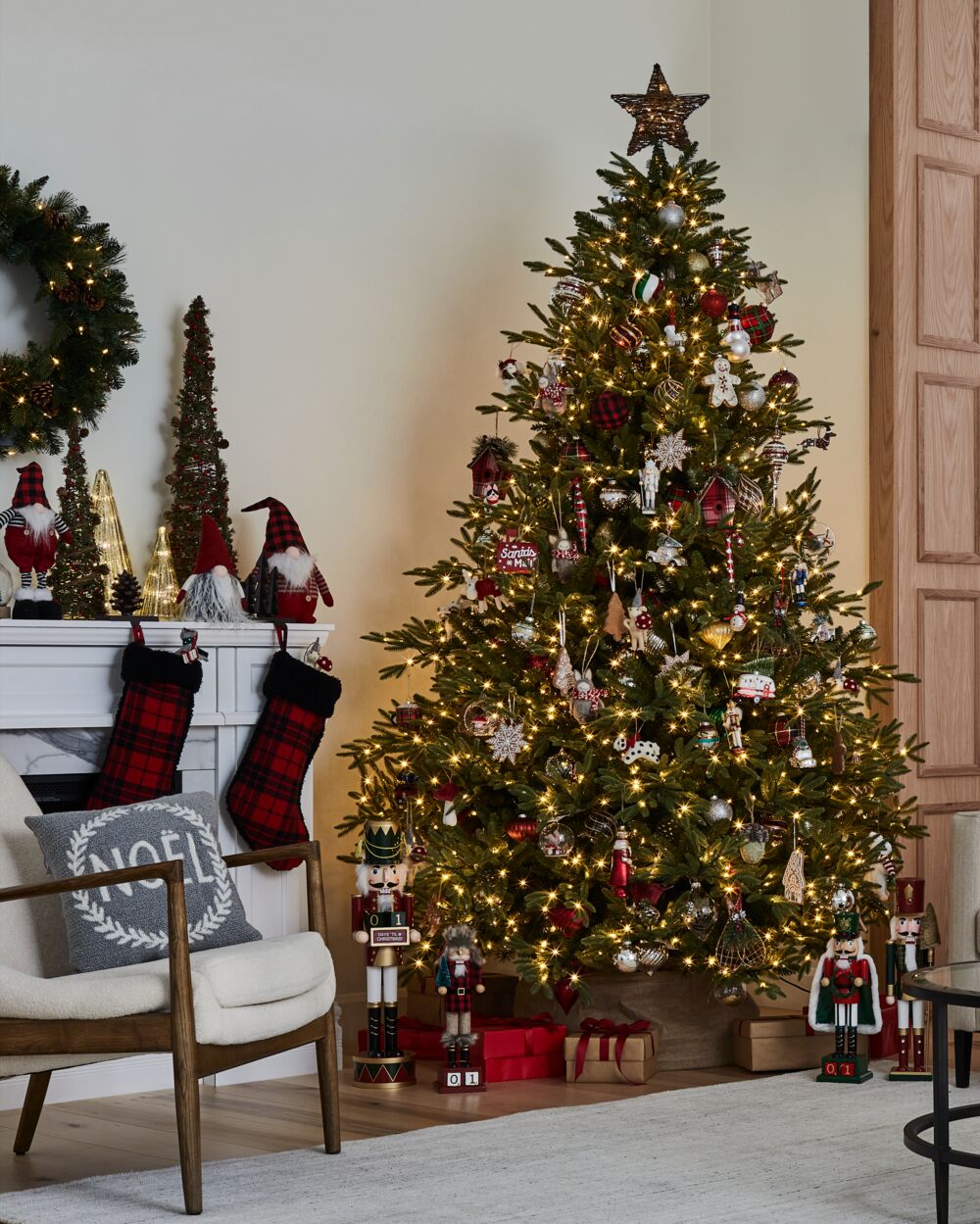
Nothing ushers in the holidays quite like trimming the tree. As the focal point of your seasonal decorating, the Christmas tree sets the mood for the whole room, whether your style is traditional, modern, nostalgic, or a little bit of everything.
The best trees feel both polished and personal. They have a clear point of view, a thoughtful mix of ornaments, and enough breathing room for the lights, branches, and meaningful pieces to shine. If you’re wondering how to decorate a Christmas tree with a more designer-approved look, start with a simple process: choose the right tree, shape it well, build the layers from the inside out, and finish with a strong topper and base.
Choose the right tree
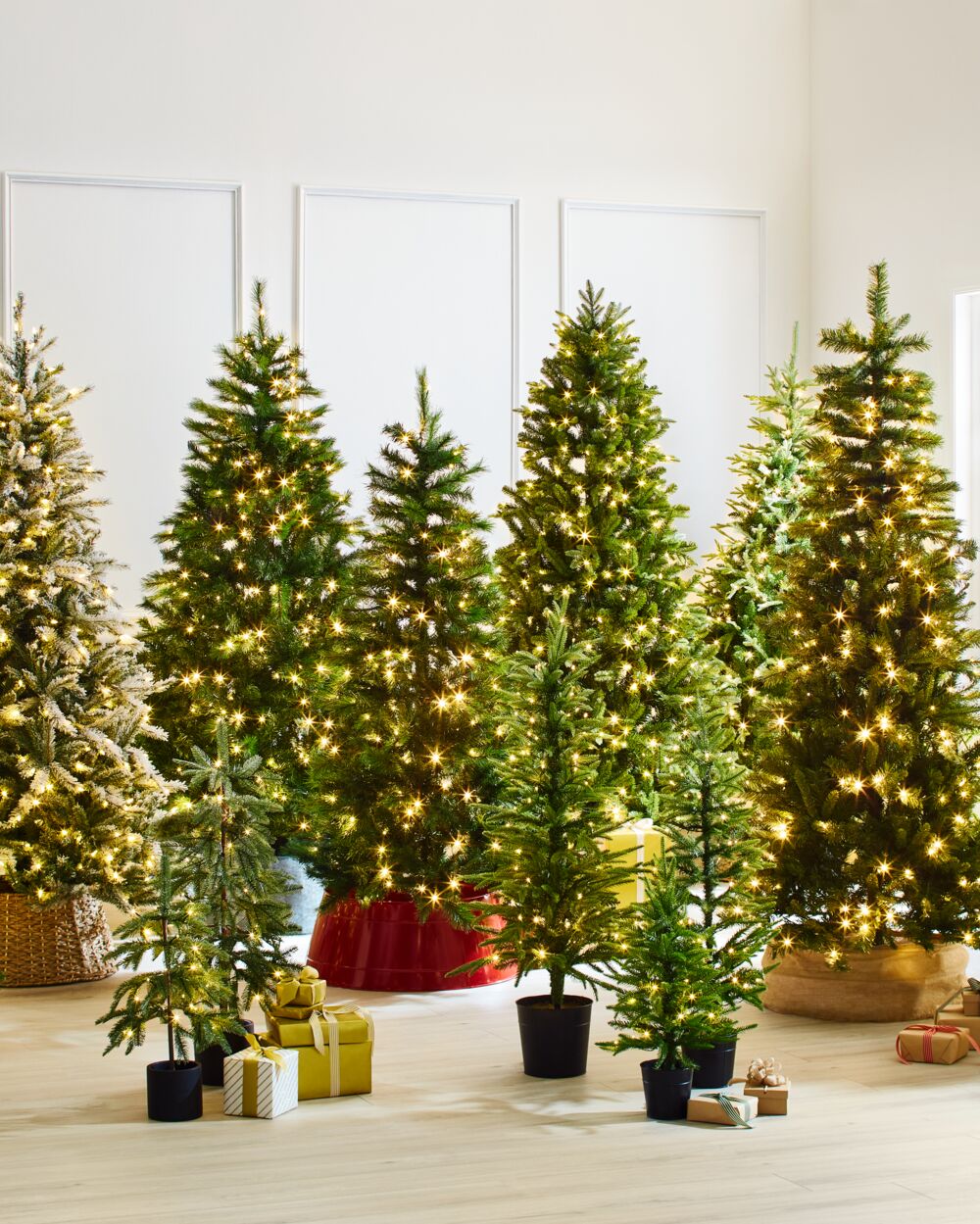
Before you begin decorating, think about the tree itself. The size, shape, colour, and fullness of the tree will affect everything that follows.
A slim tree can be a good choice for smaller rooms, apartments, and tight corners. A fuller tree works well in larger living rooms or spaces with higher ceilings. A flocked tree creates a snowy, softer look, while a classic green tree gives you the most versatile foundation.
A pre-lit tree can also save time and help create an even glow. If you choose one, check the lights before decorating and make sure the branches are arranged to distribute the light properly.
The tree should feel proportional to the room. Leave enough space around it for people to move comfortably, and make sure the top has room for a topper without touching the ceiling.
Shape the branches
A well-shaped tree makes every other step easier. Once the tree is assembled, take time to fluff the branches from the inside out. Separate the tips, fill visible gaps, and angle branches in different directions so the tree feels fuller and more natural.
This step is especially important with faux trees, which can look compressed when they first come out of storage. Don’t rush it. A carefully shaped tree creates the structure needed for lights, ornaments, garlands, and ribbon to sit properly.
If the tree has uneven areas, use them strategically. Picks, sprays, large ornaments, or ribbon can help fill gaps later, but the tree should still have a balanced shape before decorating begins.
Decide on a theme
A designer-approved approach to how to decorate a Christmas tree starts with choosing a theme that feels authentic to your home and your style. This doesn’t have to be overly strict. Think of it as a direction that helps guide the ornaments, ribbon, topper, and tree skirt.
Classic red and green feels timeless and festive. Metallic ornaments can create a more polished or contemporary look. White, ivory, champagne, and soft gold feel warm and understated. A nostalgic tree can include collected ornaments, handmade pieces, and keepsakes from different years.
Once you choose a direction, edit your ornaments before you start hanging them. Set aside the pieces that support the look and save anything that feels unrelated for another room, a secondary tree, or future use.
A strong theme doesn’t mean everything has to match. The most interesting trees usually have a mix of finishes, shapes, and materials. The key is making sure they feel connected.
Add the lights
f your tree is pre-lit, check for burnt-out bulbs and adjust the branches for an even glow. If you’re adding string lights, start near the trunk and work outward. This creates depth and helps the whole tree feel lit from within.
Warm white lights are the most classic choice and work with almost any ornament palette. Coloured lights can feel playful and nostalgic. Either can work beautifully, as long as the lighting supports the overall mood of the tree.
A generous amount of light makes the tree feel more festive, but the effect should still be soft and warm. Step back as you go to make sure the glow is balanced from top to bottom.
Build the base layer
The best way to decorate a Christmas tree is to start with the pieces that create depth and fullness. Larger round ornaments are useful for this first layer because they establish the colour palette and help fill the tree visually.
Place these ornaments slightly deeper into the branches, rather than only on the outer tips. This makes the tree feel fuller and gives the design more dimension. Stick to two or three main colours for the base layer so the tree feels cohesive.
Boxed ornament sets are often useful here because they provide repetition. Repetition helps the eye move around the tree and makes the finished look feel more intentional.
Add feature ornaments
Once the base layer is in place, add the more distinctive ornaments. These are the pieces with special shapes, finishes, meaning, or detail: finials, teardrops, keepsakes, handmade ornaments, or pieces collected over time.
For a balanced designer look, mix feature ornaments with simpler base ornaments. A helpful approach is to use several base ornaments for every one unique piece. This keeps the tree from feeling too busy while still allowing special ornaments to stand out.
Place meaningful or fragile ornaments where they can be seen. If you have children or pets, keep delicate pieces higher on the tree and use sturdier ornaments on lower branches.
Layer in ribbon, garland, or picks
Ribbon, garland, picks, and sprays can add movement and help fill empty areas. Use them to support the theme rather than overpower the ornaments.
Ribbon can be tucked into the branches in loose sections instead of wrapped tightly around the tree. Garland can add texture, sparkle, or colour. Picks and sprays are especially useful near the top of the tree, in gaps, or in areas that need more fullness.
The goal is to create layers without hiding the shape of the tree. Step back often and adjust as you go.
Finish with the topper
The finishing flourish when you decorate a Christmas tree is the topper. A star or angel is timeless, but ribbon bows, oversized ornaments, sprays, or sculptural accents can also work well.
Choose a topper that feels proportional to the tree’s height and fullness. A small topper can get lost on a large tree, while an oversized one can feel heavy on a slimmer tree. If the topper needs extra support, gather a few branches together near the top to help hold it in place.
The topper should reinforce the theme, not compete with it. Think of it as the final note that completes the tree.
Ground the tree with a skirt
A tree skirt hides the stand, softens the base, and creates a finished place for gifts. Choose one that suits the overall mood. Faux fur can feel cozy and festive, plaid works well with a traditional or chalet-inspired look, velvet feels more dressed up, and linen or woven textures feel natural and understated.
The skirt should extend well beyond the base of the tree so it feels properly scaled. If the tree is large and full, a too-small skirt can look out of proportion.
A basket collar is another option, especially if you prefer a more tailored or casual look.
Decorating the tree should feel joyful, not stressful. With a clear theme, a well-shaped tree, warm lights, layered ornaments, and a finished base, it’s easy to create a holiday focal point that feels polished and personal. Once complete, the tree becomes more than décor. It becomes the heart of the room for the season.
Photography by A Plus Creative (1)
