
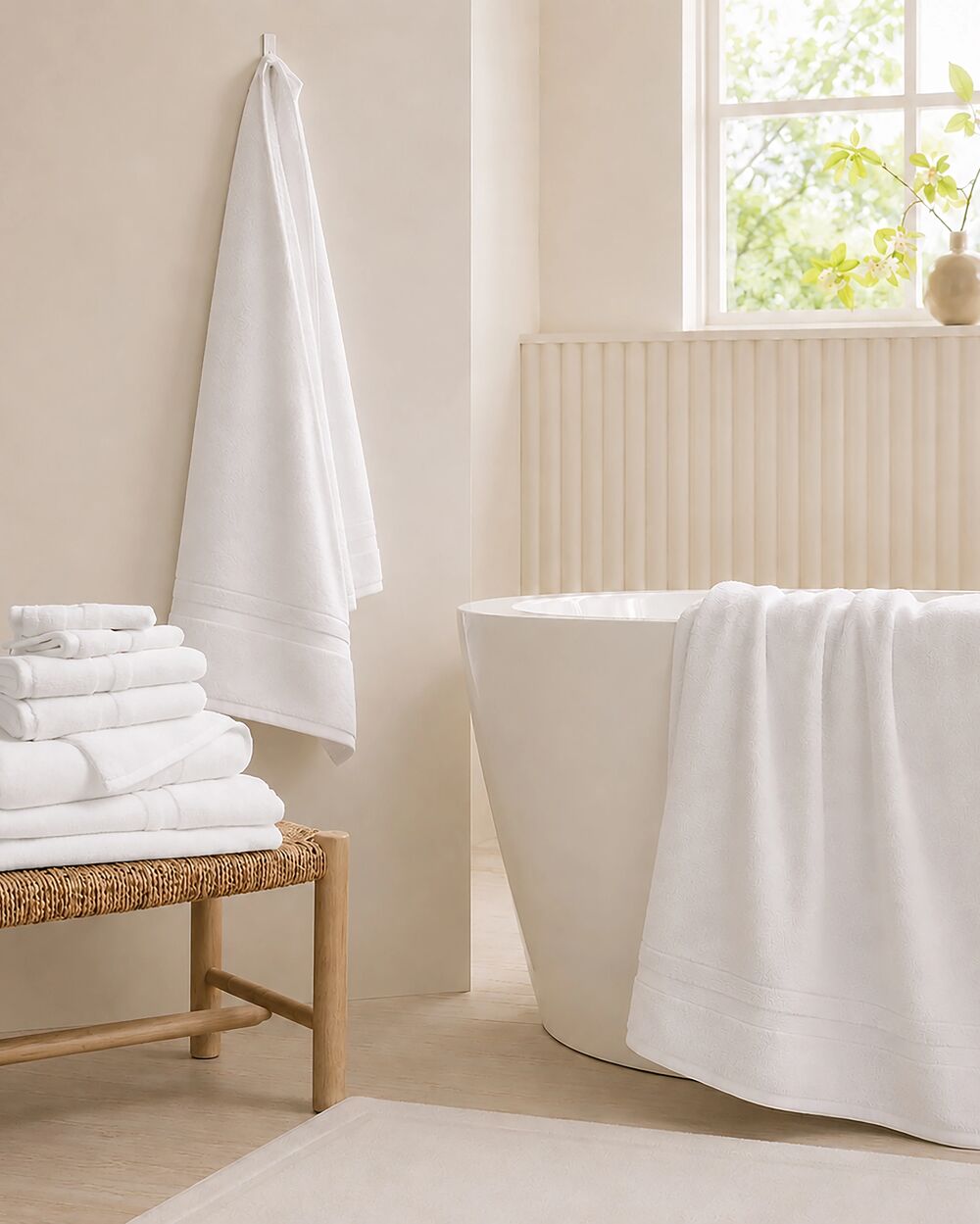
This bath towel guide starts with the details that matter most: material, weight, size, absorbency, drying time, and care. While colour is often the first thing people notice when choosing bath towels, the best towels are about more than how they look in the bathroom.
Whether you prefer a plush towel that feels soft and spa-like, a larger bath sheet with more coverage, or a quick-drying option for a busy bathroom, a few simple details can help you choose towels that feel comfortable, practical, and easy to live with.
Start with how you want the towel to feel
A good towel should suit the way you use it. Some people prefer a thick, enveloping towel after a bath or shower. Others want something lighter that dries quickly between uses. Neither option is better for every home; it depends on your bathroom, laundry routine, storage space, and personal preference.
If you want a soft, plush feel, look for towels with loft and a generous pile. If drying time matters most, a lighter weight or quick-drying construction may be more practical. For family bathrooms, durability and easy care are often just as important as softness. For a principal bathroom or guest bath, a larger bath sheet can add a more indulgent feel.
Understand towel materials
Every bath towel guide should start with material because it has a major impact on softness, absorbency, drying time, and long-term durability.
Cotton is a classic choice because it is naturally absorbent, durable, and comfortable against the skin. It can feel soft or more textured depending on the yarn, weave, and towel construction.
Cotton and bamboo blends are valued for their soft feel and absorbency. Bamboo-derived fibres are often blended with cotton to add softness and help the towel dry more efficiently. This can be a good choice for everyday towels, especially in bathrooms where towels need to feel plush but still dry well between uses.
Low-twist cotton towels can feel especially soft and lofty because the yarns are less tightly twisted. This creates a plush hand-feel and a more substantial look, while still allowing the towel to absorb well.
Jacquard terry towels use a woven pattern within the terry construction, giving the towel texture and visual interest. They can be a good option when you want a towel that feels practical but also adds a more finished decorative detail to the bathroom.
The most important thing is to choose a material that fits your routine. A guest bath may call for a plush, decorative towel, while a high-use family bathroom may benefit from something soft, absorbent, and quick drying.
Pay attention to GSM
GSM stands for grams per square metre. It refers to the density or weight of a towel. In general, a higher GSM towel will feel thicker and more plush, while a lower GSM towel will feel lighter and dry faster.
A towel around 400 to 500 GSM is usually lighter and quicker to dry, making it useful for gyms, travel, kids’ bathrooms, or humid spaces.
A towel around 500 to 600 GSM offers a balance of softness, absorbency, and drying time. This is often a practical everyday range for bath towels.
A towel around 600 GSM and above usually feels more plush and substantial. It can bring a more spa-like quality to a bathroom, especially in a bath sheet size, but may take longer to dry depending on the room’s ventilation.
In any bath towel guide, GSM is helpful, but it is not the only measure of quality. Fibre, yarn, construction, and finishing all matter. A well-made towel should feel soft, absorbent, and substantial without becoming too heavy or slow to dry for your space.
Choose the right towel size
A practical bath towel guide should also look at size, since each towel serves a different purpose in the bathroom. A well-stocked linen closet usually includes a mix, especially in bathrooms used every day.
Washcloths are the smallest towel size and are useful for face washing, skincare routines, shaving, and everyday clean-up.
Hand towels are designed for drying hands and are especially useful beside the sink, in powder rooms, and in guest bathrooms.
Bath towels are the standard size for drying off after a bath or shower. They are practical, easy to hang, and usually the best everyday option for most bathrooms.
Bath sheets are larger than standard bath towels and offer more coverage. They are ideal if you prefer to feel wrapped after a bath or shower, or if you want to create a more generous, spa-like experience.
Tub mats are thicker towel-like mats placed outside the bath or shower. They add comfort underfoot and help absorb water after bathing.
Brian Gluckstein’s Tip: For everyday use, three sets of towels per person is a practical starting point: one in use, one in the laundry, and one clean set in the linen closet.
Decide what to buy for each bathroom
Not every bathroom needs the same towel setup. A principal bathroom may call for larger bath sheets, soft hand towels, and a coordinated tub mat. A kids’ bathroom may need durable, quick-drying bath towels that can handle frequent washing. A powder room usually only needs a few hand towels, but this is a good place to choose a texture or colour that feels a little more decorative.
For guest bathrooms, keep the selection simple and generous. A bath towel or bath sheet, hand towel, and washcloth for each guest is usually enough. Choose colours that work with the room and are easy to launder.
If linen closet space is limited, focus on the sizes used most often. Bath towels are the most versatile, while bath sheets are best when you have room to store and hang them properly.
Think about colour and bathroom style
Towels are a simple way to shift the mood of a bathroom. White towels feel fresh, clean, and classic. Soft grey, blue, taupe, or charcoal can add warmth or contrast while still feeling timeless. Darker towels can look tailored and dramatic, especially in a bathroom with light tile or white fixtures.
For a calm, spa-inspired look, choose one colour and use it consistently across bath towels, hand towels, and washcloths. For more depth, layer a neutral base with a darker or lighter accent towel. Texture also matters. A jacquard pattern, ribbed detail, or embroidered accent can add interest without overwhelming the room.
Wash towels before first use
New towels should be washed before they are used. This helps remove finishing residue from manufacturing and can improve absorbency. Wash similar colours together and avoid overloading the machine, which can prevent towels from rinsing properly.
Use warm water for most towels unless the care label says otherwise. Hot water can be useful for white towels from time to time, but frequent hot washing may wear fibres down faster.
Use the right detergent
A mild liquid detergent is usually the best choice for bath towels. Too much detergent can build up in the fibres and make towels feel stiff or less absorbent. Use the recommended amount, and consider using a little less if your washing machine is high-efficiency or if towels feel like they are not rinsing cleanly.
Avoid heavy fragrances or additives if you prefer towels to feel soft and fresh without residue.
Skip fabric softener
Fabric softener can make towels feel smooth at first, but it can leave a coating on the fibres. Over time, this can reduce absorbency and make towels less effective. Dryer sheets can have a similar effect.
If towels start to feel less absorbent, wash them without softener and avoid using too much detergent. A proper rinse is often what helps towels feel fresh again.
Dry towels completely
Towels need to dry fully between uses. Hang them open on a towel bar rather than folded tightly on a hook whenever possible. Good airflow helps prevent musty odours and keeps towels feeling fresher longer.
In the dryer, use a medium heat setting and avoid over-drying, which can weaken fibres over time. Remove towels when they are dry and fold them once they have cooled.
Replace towels when needed
Even well-made towels do not last forever. If towels feel rough, stay damp for too long, have a lingering odour after washing, or no longer absorb well, it may be time to replace them. Fraying edges, thinning terry loops, and loss of softness are also signs that a towel has reached the end of its everyday life.
A good bath towel guide should make choosing towels feel less complicated. Start with how you want the towel to feel, then consider material, GSM, size, colour, and care. With the right mix, your towels can bring comfort, function, and a more finished look to the bathroom every day.
