
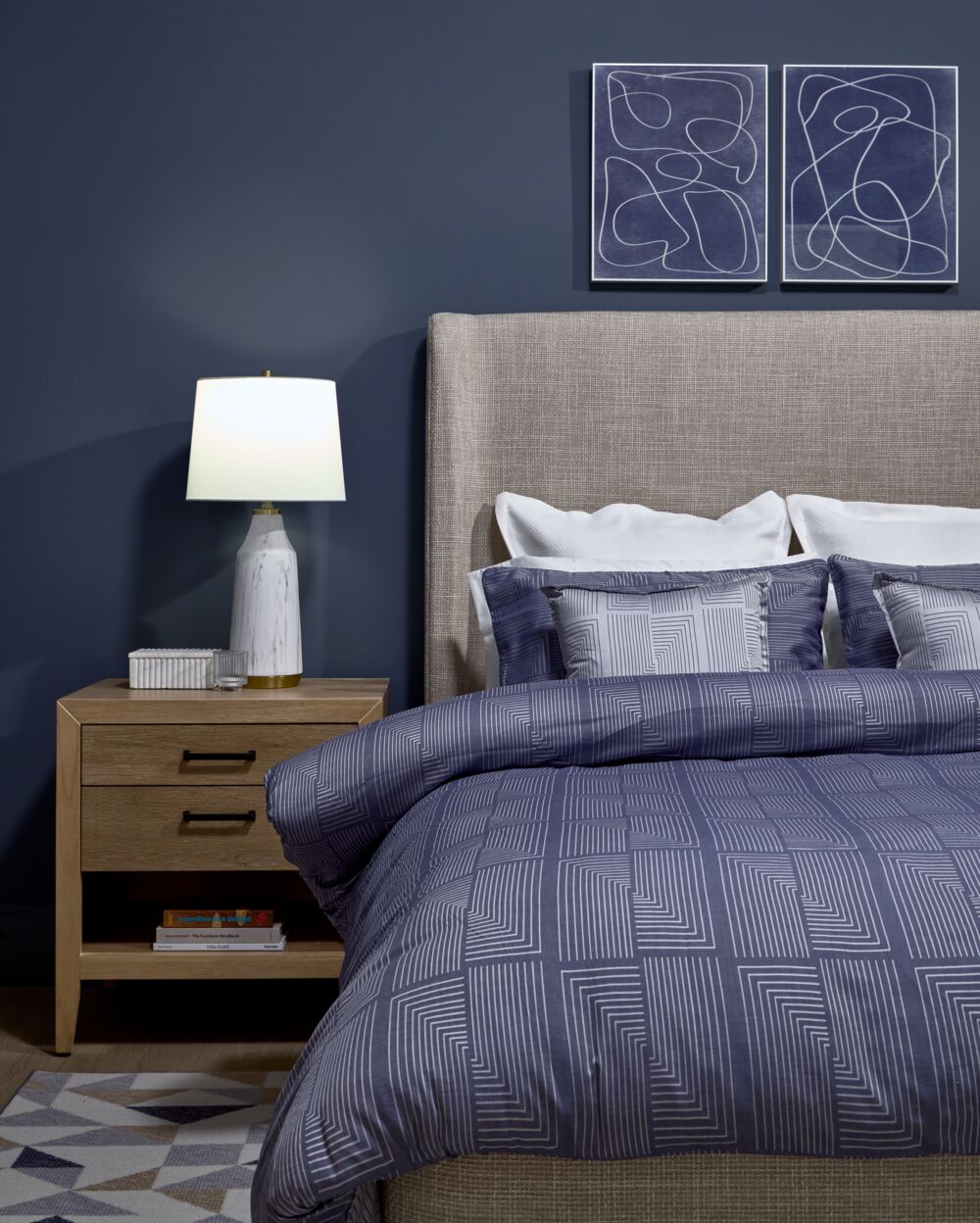
A compact bedroom can still be comfortable, functional, and full of character. The key is deciding what the room needs most, then choosing furniture and storage that support those priorities without crowding the layout. These small bedroom ideas make better use of the available floor and wall space while creating a room that feels considered rather than compromised.
The most useful small bedroom ideas begin with practical decisions about the bed, circulation, lighting, and storage. Once those essentials are working, colour, pattern, art, and bedding can give the space personality without taking up valuable room.
Start with the bed and circulation
The bed is the largest piece of furniture in most bedrooms, so begin by finding the position that allows the room to function best. Consider the path from the doorway to the closet, dresser, and each side of the bed. Keeping those routes as clear as possible will make the room easier to use every day.
It can be tempting to choose the largest bed that will fit, but fitting within the walls isn’t the same as fitting comfortably. A slightly smaller bed may leave room for a useful nightstand, better access to storage, or more comfortable circulation. If the bedroom is shared, try to preserve access to both sides. In a guest room or single bedroom, placing one side against a wall may be a practical way to gain more usable floor space.
Before buying furniture, map out the dimensions with painter’s tape. This makes it easier to see how much clearance will remain around the bed and whether doors and drawers can open fully.
Choose bedside furniture carefully
A compact bedroom may not have room for two traditional nightstands, but that doesn’t mean the bedside area has to lose its function. Look for narrow tables, floating shelves, or wall-mounted nightstands that provide a surface without taking up more floor space than necessary.
Storage matters as much as size. A nightstand with drawers can keep smaller essentials out of sight, while an open shelf provides a convenient place for books. If there’s only room for one nightstand, balance the other side of the bed with artwork, a wall-mounted light, or another vertical element rather than squeezing in furniture that interrupts the walkway.
Nightstand height is important, too. Choose a surface that sits close to the top of the mattress so it’s comfortable to reach from bed.
Move the lighting off the nightstand
A table lamp can occupy most of a narrow nightstand. Wall sconces or pendants free up that surface while still providing focused light for reading and winding down at night.
Swing-arm designs can be adjusted toward the bed when needed, while a more compact fixed sconce keeps the arrangement streamlined. Position the fixture based on how you sit or read in bed, taking care that the bulb isn’t directly in your line of sight.
Include an overhead fixture for general illumination and, if possible, put the different light sources on dimmers. Layered lighting helps a small room shift between practical and atmospheric without requiring additional furniture.
Make storage work harder
When closet space is limited, the bed offers one of the largest potential storage areas in the room. A storage bed with built-in drawers or a lift-up platform can hold extra bedding, seasonal clothing, or less frequently used items.
You can also add low-profile bins or rolling drawers beneath an existing bed. Measure the height and depth of the available space before choosing containers, and keep frequently used items near the most accessible edges. Enclosed storage will generally look calmer than a collection of visible baskets and boxes.
Look for other furniture that can perform more than one role. A small dresser can double as a nightstand, while a wall-mounted desk can provide a work surface or vanity and fold away when it isn’t needed. An ottoman or bench with concealed storage can be useful, but only if there’s enough space to move around it comfortably.
Use the walls from floor to ceiling
Among the most effective small bedroom ideas is using vertical space instead of adding more furniture to the floor plan. A tall dresser may provide the same amount of storage as a wider one while occupying less wall space. Shelves above a desk or dresser can hold books and decorative objects without requiring another cabinet.
A tall headboard, vertically arranged artwork, or a mirror can also draw attention upward and emphasize the room’s height. These elements don’t create physical space, but they can help the room feel less confined.
Keep shelving purposeful and relatively edited. Filling every wall from top to bottom can make a compact room feel crowded, even when the floor remains clear.
Add personality without using floor space
A small room doesn’t have to rely on pale colours or minimal decoration. Paint, wallpaper, art, and bedding can introduce character without adding another piece of furniture.
A deeper wall colour can create a cozy, enveloping effect, while a subtle wallpaper adds pattern and texture. If you prefer a lighter palette, bring in contrast through artwork, cushions, or a patterned duvet cover. Repeating a few colours throughout the room will make the different elements feel connected and reduce visual clutter.
The limited square footage can also make special finishes more manageable. A wallpaper or paint treatment that might feel like a significant commitment in a larger room can have strong impact in a smaller space.
Use mirrors with purpose
Mirrors are most effective when their placement is considered. Positioning one across from or beside a window can reflect daylight into the room, while a full-length mirror can serve a practical purpose without requiring a separate dressing area.
A mirror above a dresser or narrow console can also create a more finished arrangement. If wall space is limited, consider a mirror mounted on the back of a door or incorporated into a closet door.
Choose a size that relates to the furniture or wall around it. A mirror that’s too small may add visual clutter without reflecting enough light or space to make a meaningful difference.
Edit the furniture plan
Not every bedroom needs two nightstands, a dresser, a bench, a chair, and additional storage. In a small room, furniture should earn its place by adding clear function.
Start with the bed and the storage you use most, then add only what fits comfortably. If the closet provides enough clothing storage, a dresser may not be necessary. If you don’t sit in the bedroom, use the space that would have held a chair to improve circulation instead.
Furniture with raised legs or a lighter profile can expose more of the floor and make the room feel less crowded. However, visual lightness shouldn’t come at the expense of useful storage. The best choice is the one that solves the room’s most important practical need.
With the right small bedroom ideas, limited square footage can lead to a more thoughtful and efficient room. Start with a clear layout, use the walls and under-bed area strategically, and choose furniture that provides meaningful function. Once those elements are in place, colour, pattern, and personal details can make the bedroom feel comfortable, polished, and entirely your own.
Photography by Stacey Brandford
