Outdoor lighting has a practical job, but it also has a major effect on how a home feels from the outside. The right fixtures can make an entryway more welcoming, help guide guests safely after dark, and add a more finished look to the exterior. This outdoor lighting guide breaks down what to consider before choosing sconces, pendants, flushmounts, and post lights for your home.
A good outdoor lighting plan starts with function. Think about where you need visibility, where you want to create atmosphere, and which existing fixtures are ready to be replaced. From there, you can choose exterior lights that suit your home’s architecture, connect to your interior style, and feel cohesive from the front door to the backyard.
Start with where you need light
A practical outdoor lighting guide starts with placement. Before choosing a style, walk around the exterior of your home and note where lighting is needed most. The front door is usually the first priority, followed by side doors, garage doors, walkways, porches, patios, balconies, and garden paths.
Some areas need light for safety and visibility. Others need a softer glow for atmosphere. A front entry, for example, should feel welcoming and easy to navigate. A covered porch may need overhead light, while a pathway may benefit from post lights or low landscape lighting that helps guide movement without feeling too bright.
If you’re updating an existing home, it’s usually easiest to replace fixtures where hardwired lighting already exists. Moving or adding electrical locations can be more involved, so start with the current placement and decide whether those fixtures are serving the home well.
Layer outdoor lighting
A useful outdoor lighting guide should look at more than one fixture. Just as indoor lighting works best in layers, exterior lighting often feels better when it combines different types of light.
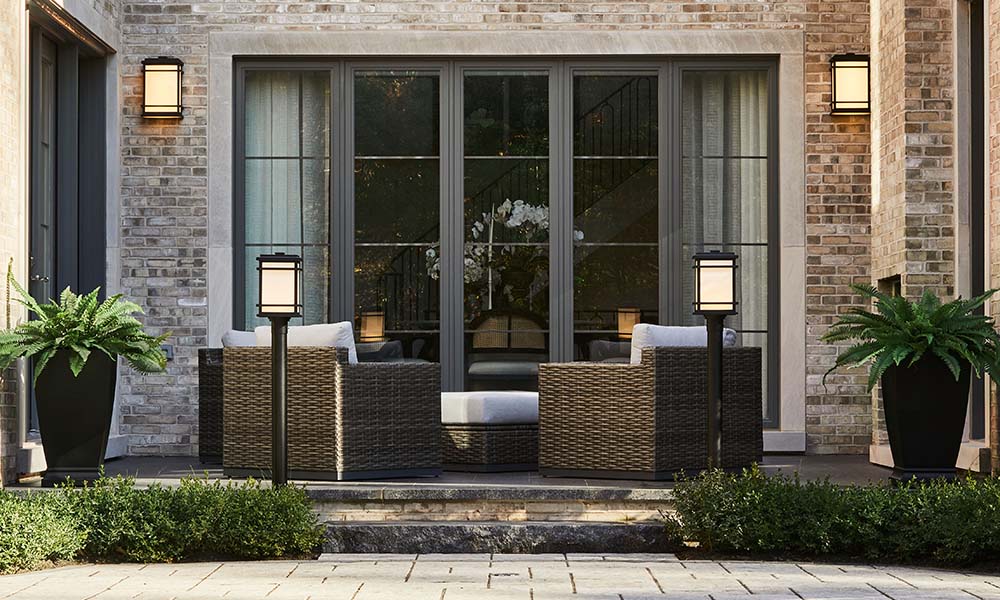
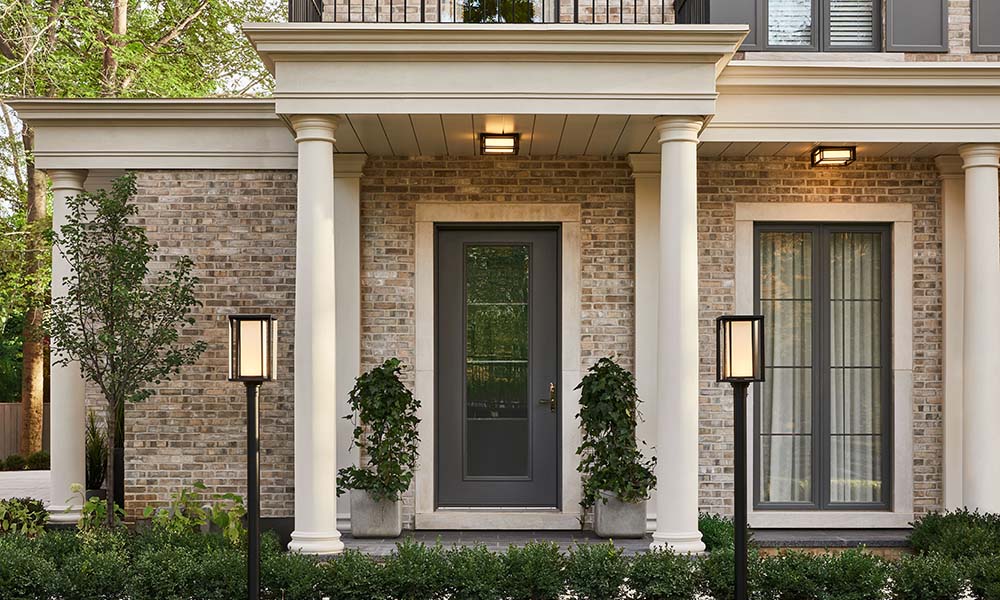
Wall sconces can frame an entry, garage, or side door. Pendants or flushmounts can provide overhead light in covered areas. Post lights can help illuminate a garden path, driveway entrance, or walkway. Together, these layers make the exterior more functional and more inviting.
The goal isn’t to light every surface equally. Instead, create a gentle rhythm of light where it’s needed. Outdoor lighting should make the home feel safer and more welcoming without becoming harsh or overly bright.
Choose the right fixture type
Different outdoor lighting fixtures work best in different locations. Choosing the right type is one of the easiest ways to make the exterior feel more polished and practical.
Outdoor sconces are one of the most common choices. They’re usually installed vertically on exterior walls and work well beside front doors, back doors, balcony doors, and garage doors. They can also help light narrow side passages or covered walkways.
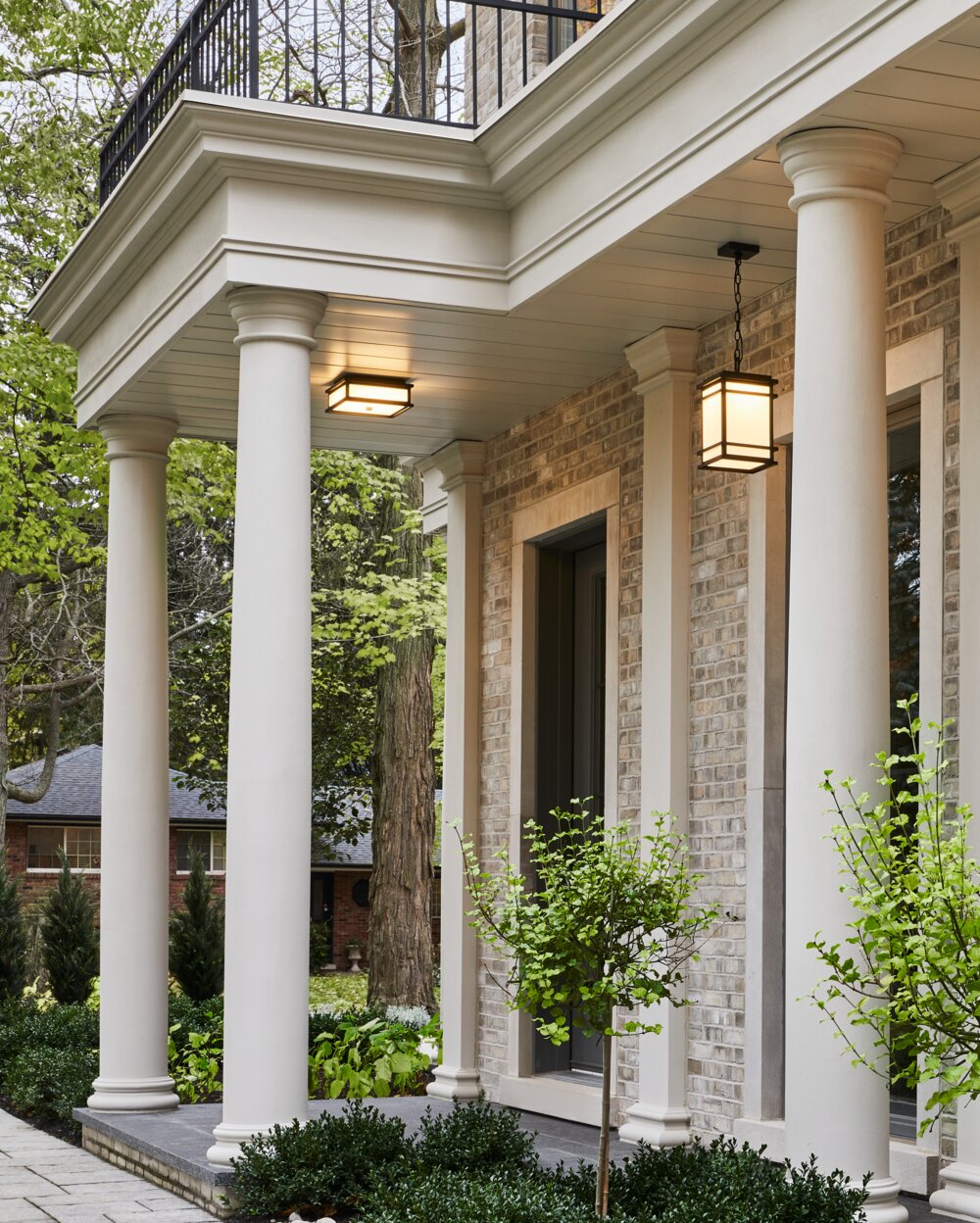
Outdoor pendants are best for covered areas with enough ceiling height, such as porches, porticos, covered patios, and balconies. Because they hang down, they can create a stronger design statement than a flushmount. They’re not usually the best choice for windy areas or spaces where clearance is limited.
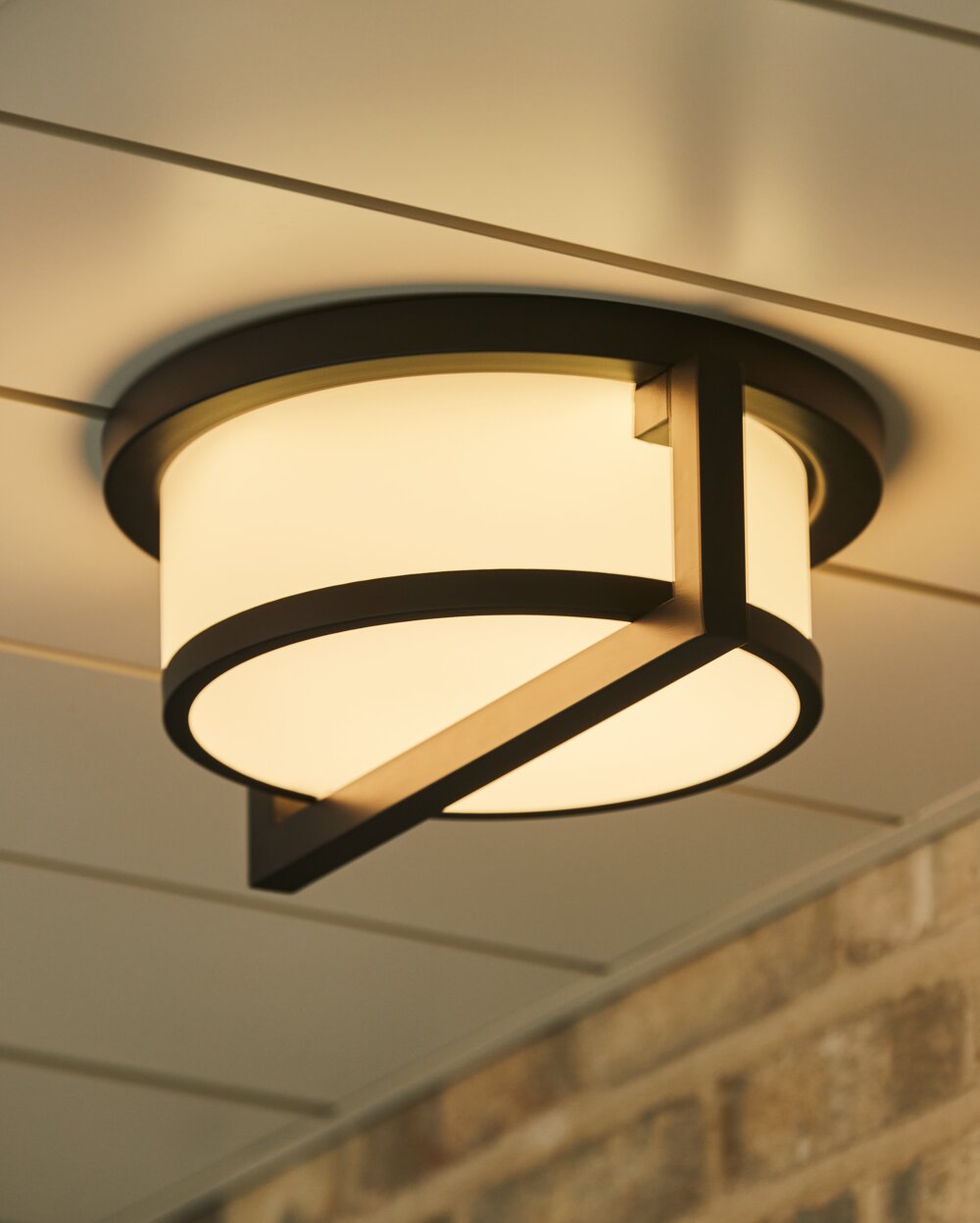
Outdoor flushmounts sit close to the ceiling and are useful under covered porches, breezeways, balconies, or low overhangs. They provide overhead light without taking up as much vertical space, making them a practical choice when a pendant would hang too low.
Post mounts are freestanding fixtures used along paths, garden areas, driveways, and entrances. They can add a traditional or architectural detail to the landscape while helping guide movement after dark. Because they require wiring and placement in the ground, they usually need more planning than a simple fixture replacement.
Match the fixture to the architecture
Outdoor lights should feel connected to the architecture of the home. A traditional house may suit lantern-style sconces, classic post lights, or fixtures with structured lines. A contemporary exterior may work better with simple geometric shapes, clean glass, and matte black or dark metal finishes.
That said, fixtures don’t need to be overly literal. A more modern outdoor light can freshen up a traditional exterior, while a classic lantern can add warmth to a simple facade. The key is to choose fixtures that relate to the proportions, materials, and mood of the home.
Look at the details already in place: brick, stone, siding, trim, doors, railings, windows, and hardware. The best exterior fixtures should feel like part of that larger composition, not an afterthought.
Connect the exterior lighting to your interior style
Outdoor lighting is seen first from the street, but it should still feel connected to the rooms inside. If your interior style is warm and traditional, outdoor fixtures with classic profiles or softer glass may feel natural. If your home has a cleaner, more contemporary look, exterior lights with simple lines and darker finishes may create a better connection.
This is especially important around entryways, patios, and balconies where indoor and outdoor spaces visually overlap. A front porch light, for example, can hint at the design style inside. A pair of sconces beside a patio door can help the transition from living room to outdoor seating area feel more cohesive.
Keep the look consistent
There are already many materials outside a home, from brick and stone to roofing, paving, planting, railings, and doors. For that reason, outdoor lighting usually looks best when the fixture style is consistent.
This doesn’t mean every fixture has to be identical, but they should feel related. Choosing sconces, pendants, flushmounts, and post lights from the same collection is the simplest way to create a cohesive look. If you’re mixing collections, repeat at least one element, such as finish, shape, glass type, or overall style.
A consistent approach helps the exterior feel calm and intentional, especially when lighting appears in several places around the home.
Pay attention to scale
Scale is one of the most important buying criteria for outdoor lighting. A fixture that’s too small can look underwhelming, especially beside a tall front door or wide garage. A fixture that’s too large can overwhelm the entrance or feel out of proportion with the architecture.
At the front door, sconces should feel substantial enough to be noticed from the street but not so large that they compete with the door itself. If you’re placing fixtures on either side of a door, choose a size that balances the height and width of the entry. For garage doors, the fixtures should relate to the scale of the door and surrounding wall space.
For pendants, consider both width and drop. There should be enough clearance for people to move comfortably underneath, and the fixture shouldn’t swing in the wind or interfere with the door. Flushmounts are often better for lower ceilings, tight covered areas, or exterior spaces where a hanging fixture would feel impractical.
Choose the right finish
Finish has a big effect on the overall look. Matte black is versatile and works well with many exterior materials, including brick, stone, white siding, black-framed windows, and contemporary railings. Dark bronze can feel softer and warmer, especially on traditional homes. Brushed or aged metal finishes can add character, depending on the style of the fixture and the architecture.
Consider the other exterior finishes before choosing. Door hardware, house numbers, railings, window frames, and outdoor furniture can all help guide the direction. The finish doesn’t have to match everything exactly, but it should feel intentional.
For a more cohesive look, repeat the lighting finish somewhere else on the exterior, even in a small way. This could be through door hardware, planters, furniture frames, or railings.
Think about glass and light quality
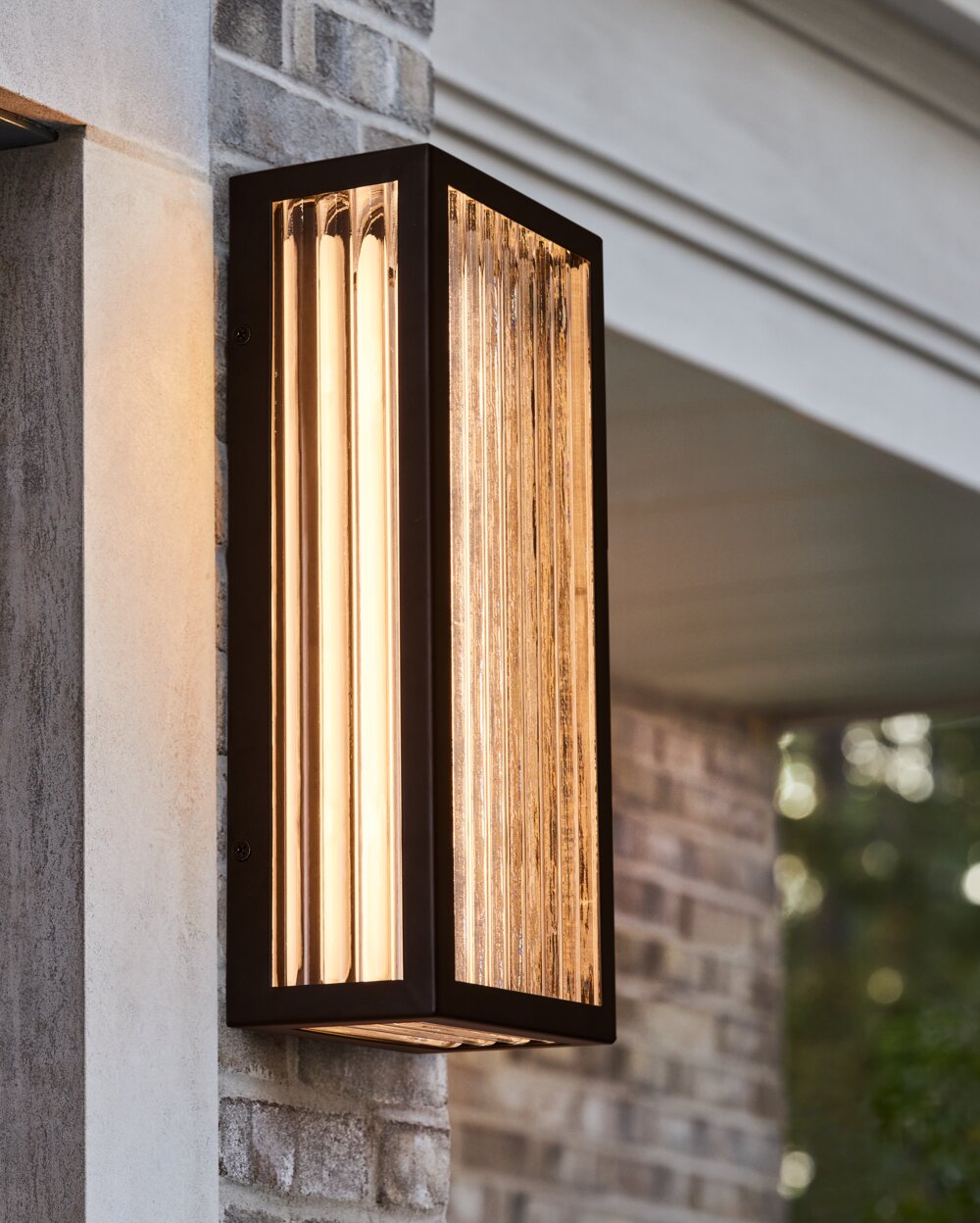
The shade or glass affects how the light looks at night. Clear glass can feel bright and crisp, especially with visible bulbs. Frosted, seeded, ribbed, or opaque glass will usually create a softer glow.
For front entries and porches, a softer light can feel more welcoming. For side doors, garages, and pathways, brighter light may be more practical. If the fixture has exposed bulbs, choose bulbs carefully because they’ll be part of the overall look.
Outdoor lighting should support visibility without creating glare. A warm white bulb is often more flattering for exterior spaces than a cool, bluish light. If brightness is a concern, look for a bulb that gives enough light for safety while still feeling comfortable from the street and from inside the home.
Check the outdoor ratings and placement
No outdoor lighting guide is complete without checking product ratings. Exterior fixtures need to be suitable for outdoor use. Before buying, check that the fixture is rated for the location where it will be installed. Covered porches, open walls, and exposed garden areas may have different requirements.
A fixture under a covered porch may not face the same amount of rain or snow as a sconce on an exposed wall. Post lights and path lights need to be suitable for landscape conditions. In all cases, follow the product specifications and use a qualified electrician for hardwired installation.
Durability matters too. Outdoor lights are exposed to changing temperatures, moisture, wind, dust, and sun. Choosing the right fixture for the location helps it look better and perform properly over time.
Plan for the whole exterior
The best outdoor lighting guide isn’t just about choosing one fixture. It’s about looking at the exterior as a whole. Start with the front entry, then consider the garage, side doors, pathways, porch, patio, and garden areas. Decide where you need practical visibility, where you want atmosphere, and where a fixture can help the home feel more complete.
Outdoor lighting doesn’t need to be complicated. Choose fixtures with the right placement, scale, finish, glass, and outdoor rating, then keep the overall look consistent. With a thoughtful plan, exterior lighting can make your home feel safer, more welcoming, and more polished after dark.
Photography by A Plus Creative